
-
Publish Your Research/Review Articles in our High Quality Journal for just USD $99*+Taxes( *T&C Apply)
Offer Ends On
Publish Your Research/Review Articles in our High Quality Journal for just USD $99*+Taxes( *T&C Apply)
Offer Ends On
Edwin M. Puhagan* and Dayang Nurjana M. Ulama
Corresponding Author: Edwin M. Puhagan, RDESP Research Division/President- Employees Union Professor -Institute of Agricultural Sciences Tawi-Tawi Regional Agricultural College Nalil, Bongao, Tawi-Tawi, Philippines.
Received: October 13, 2026 ; Revised: October 17, 2026 ; Accepted: October 19, 2026 ; Available Online: October 21, 2026
Citation: Puhagan EM & Ulama DNM. (2026) SEA-TO-TABLE DIETS: Dietary Diversity, and Nutritional Status of Children in Tawi-Tawi Households: A Cross-Sectional Study. J Agric For Meterol Stud, 4(3): 1-9.
Copyrights: ©2026 Puhagan EM & Ulama DNM. This is an open-access article distributed under the terms of the Creative Commons Attribution License, which permits unrestricted use, distribution, and reproduction in any medium, provided the original author and source are credited.
Views & Citations
Likes & Shares
Child under nutrition remains a public-health concern in geographically isolated coastal communities, where household diets are affected by livelihood patterns, food access, poverty, and caregiving practices. This cross-sectional study examined the association among household access to coastal harvests, child dietary diversity, and nutritional status in selected coastal municipalities of Tawi-Tawi, Philippines.
A total of 300 mothers or primary caregivers of children aged 6–59 months were included from Bongao, Panglima Sugala, Simunul, Sitangkai, and Sibutu, with 60 respondents per municipality. Data were collected through structured caregiver interviews, a 24-hour dietary recall, household coastal-food access measures, and child anthropometric assessment. Descriptive statistics, chi-square tests, and logistic regression were used at a 0.05 level of significance.
Most households accessed fish through daily market purchases (75.0%), whereas only 6.0% reported direct household fishing activity. Low dietary diversity was observed among 66.7% of children. Based on anthropometric indicators, 28.7% of children were underweight, 34.0% were stunted, and 25.0% were wasted. Household coastal-harvest access was significantly associated with child dietary diversity (χ2=18.64\chi^2 = 18.64χ2=18.64, p=.001p = .001p=.001). Dietary diversity was also significantly associated with nutritional status (χ2=21.37\chi^2 = 21.37χ2=21.37, p=.001p = .001p=.001). Logistic regression showed that adequate coastal-harvest access, higher dietary diversity, maternal education, household income, and food security were significant protective factors against undernutrition.
The findings indicate that coastal food availability may support child nutrition when it is translated into diverse child diets and reinforced by nutrition education, household food security, and appropriate caregiving practices.
Keywords: child nutrition, coastal harvests, dietary diversity, food security, Tawi-Tawi, undernutrition
INTRODUCTION
Child under nutrition remains a major concern in low-income and geographically isolated communities because inadequate food intake during early childhood can impair growth, immunity, cognitive development, and later-life productivity. Dietary diversity is widely used as a practical indicator of diet quality because children who consume food from a wider range of food groups are more likely to meet their micronutrient requirements. In a Philippine study, dietary diversity significantly predicted micronutrient adequacy among non-breastfeeding children, with five to six food groups providing useful cutoffs for identifying more adequate diets.
Tawi-Tawi is a coastal and island province where fishing, fish trading, seaweed culture, and other marine-based livelihoods play a central role in household food access and income generation. Fish, shellfish, seaweed, and other marine foods may provide animal-source protein and micronutrients; however, physical availability does not necessarily ensure adequate child feeding. Household poverty, food insecurity, maternal education, market dependence, sanitation, workload, and feeding practices can influence whether coastal foods are converted into nutritionally adequate diets for young children.
The World Health Organization identifies length- or height-for-age, weight-for-age, and weight-for-length or weight-for-height as standard indicators for assessing child growth and undernutrition among children below five years old.
These measures distinguish chronic growth restriction, low body weight for age, and acute malnutrition. WHO’s current guidance also recognizes wasting and nutritional oedema as serious forms of acute malnutrition requiring prevention, identification, and appropriate management.
Despite Tawi-Tawi’s rich coastal environment, localized evidence connecting coastal food access, dietary diversity, and child nutrition remains limited. This study was undertaken to generate evidence that may guide nutrition-sensitive fisheries, coastal-livelihood, and local health interventions.
Objectives
This study assessed the relationship among coastal harvest access, dietary diversity, and nutritional status of children in selected Tawi-Tawi households.
Specifically, it sought to:
Framework
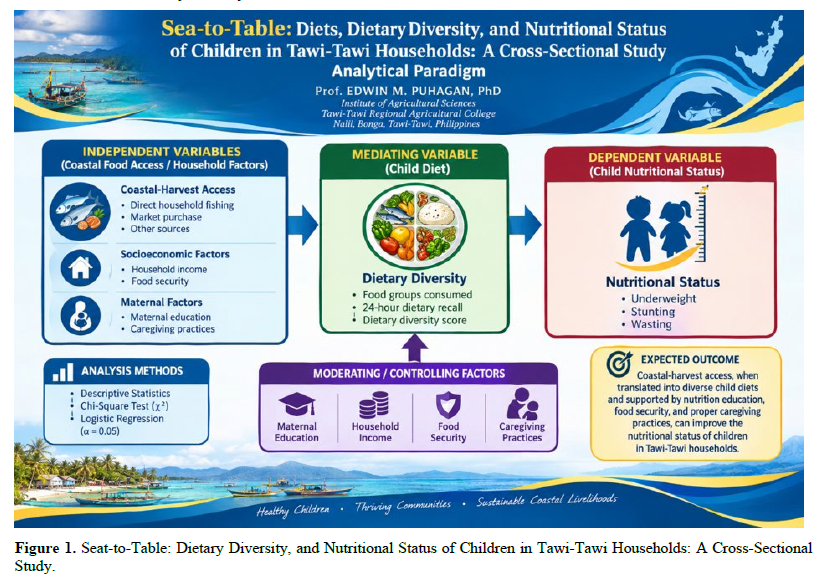
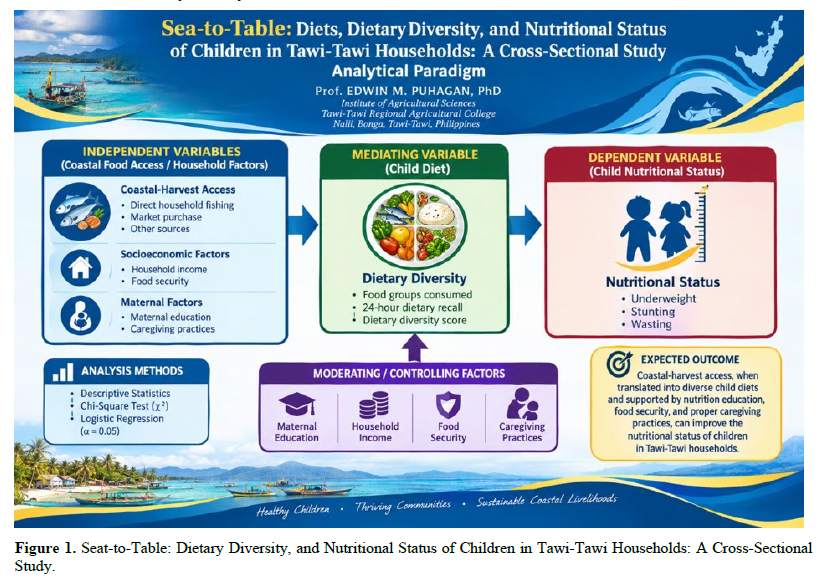
The study was guided by a food-systems and child-nutrition framework. It assumes that access to coastal harvests affects household food availability, which may improve child dietary diversity and, consequently, nutritional status.
The proposed pathway was:
Coastal harvest access→Child dietary diversity→Child nutritional status
This relationship influenced by maternal education, household income, household food security, child age and sex, feeding practices, sanitation, and access to health services.
METHODS
Research Design
A quantitative cross-sectional design was used to examine associations among household coastal-harvest access, dietary diversity, and nutritional status at one point in time. The design was appropriate for estimating the distribution of child nutrition outcomes and identifying factors associated with undernutrition within selected coastal communities.
Study Area and Participants
The study was conducted in five coastal municipalities of Tawi-Tawi: Bongao, Panglima Sugala, Simunul, Sitangkai, and Sibutu. A total of 300 households participated, with 60 respondents recruited from each municipality.
Participants were mothers or primary caregivers of children aged 6–59 months. One eligible child was selected as the index child per household. To be included, households had to have resided in the community for at least six months, have an eligible child, and provide informed consent for the interview and anthropometric assessment.
Sampling Procedure
A multistage sampling approach was employed. The five municipalities were selected because of their strong dependence on coastal livelihoods. Barangays were identified in coordination with local officials and health personnel. Eligible households were listed, and respondents were selected through simple random or systematic sampling until the required municipal allocation was achieved.
Measures
A structured questionnaire was administered to collect information on:
Coastal-harvest access referred to household access to fish, shellfish, seaweed, and other marine foods through self-harvesting, purchase, exchange, or other local sources. Dietary diversity was assessed based on the number and variety of food groups consumed by the child during the previous 24 hours.
Child nutritional status was assessed using weight-for-age, height-for-age, and weight-for-height indicators. WHO Child Growth Standards served as the reference for interpreting child growth measurements.
Data Analysis
Descriptive statistics included frequencies, percentages, means, and standard deviations. Chi-square tests were used to test associations between categorical variables. Logistic regression was used to identify predictors of child undernutrition. The level of significance was set at 0.05.
RESULTS
Respondent Profile
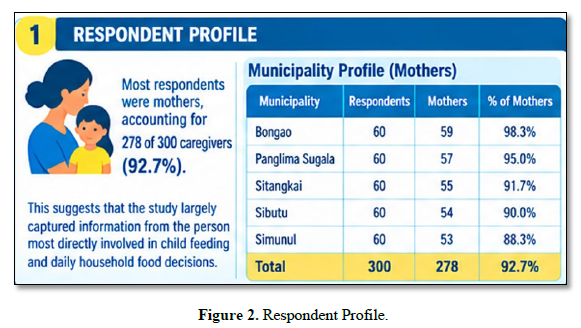
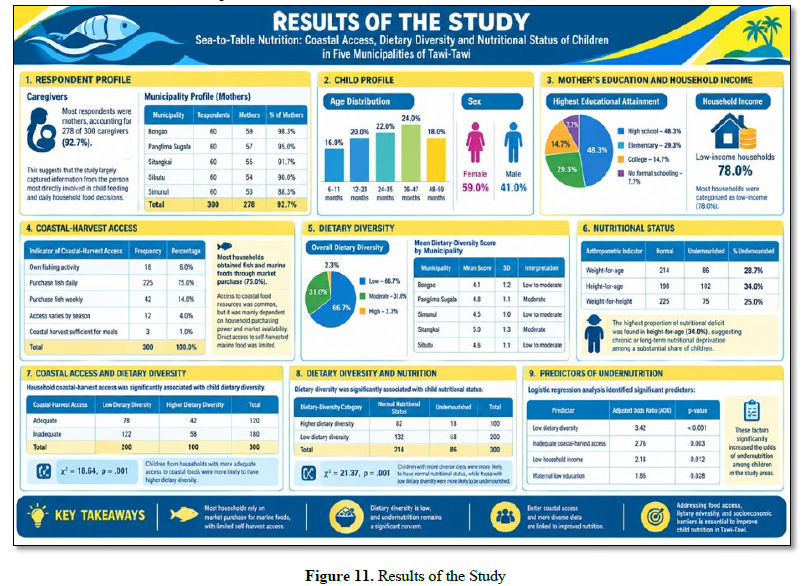
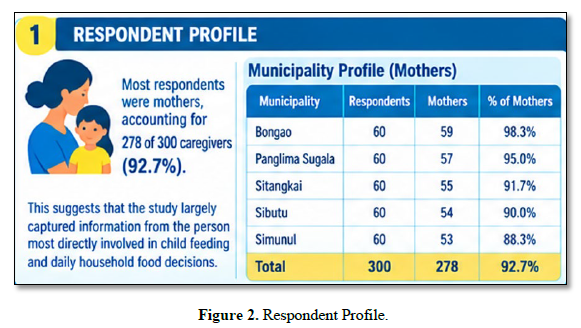
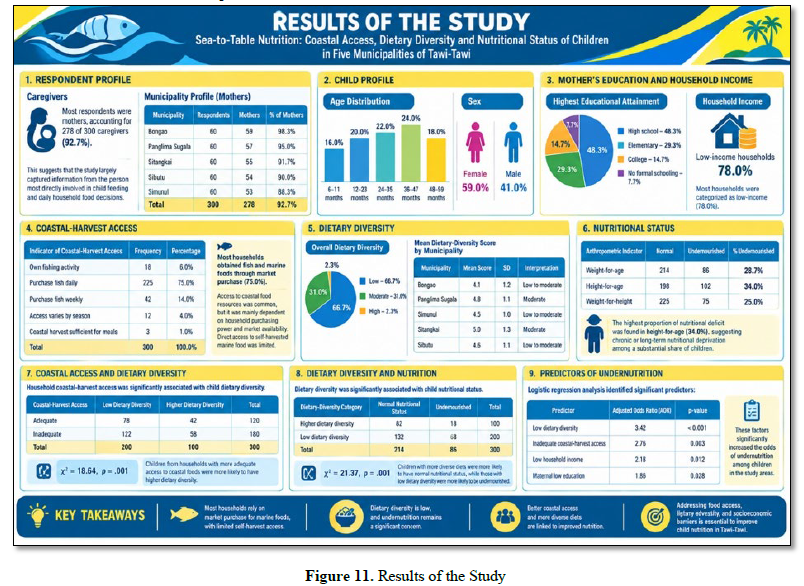
Most respondents were mothers, accounting for 278 of the 300 caregivers surveyed, or 92.7% of the total sample. The predominance of mothers suggests that the study largely captured information from the person’s most directly involved in child feeding and daily household food decisions.
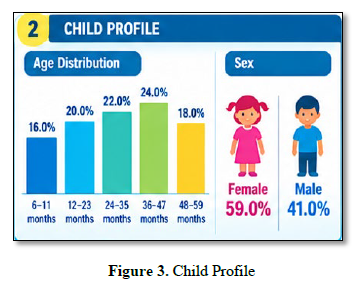
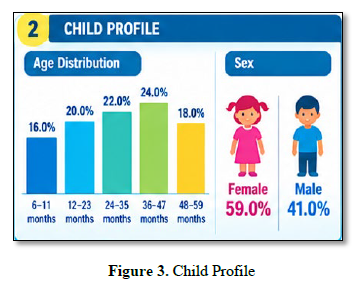
Children aged 36–47 months comprised the largest age group at 24.0%, while children aged 6–11 months comprised 16.0%. Female children represented 59.0% of the sample, while male children accounted for 41.0%.
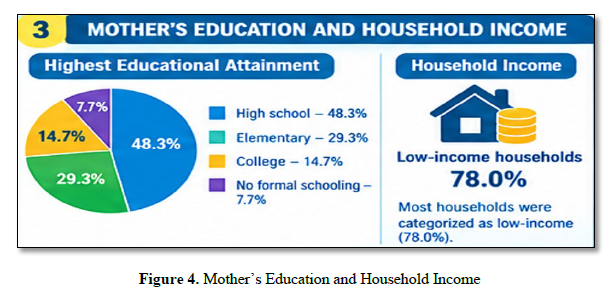
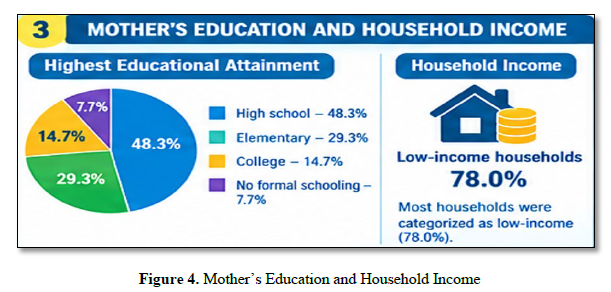
Nearly half of the mothers had reached high school level (48.3%), followed by elementary education (29.3%). Only 14.7% had college education, while 7.7% had no formal schooling. Most households were categorized as low-income households, comprising 78.0% of the sample.
Coastal-Harvest Access
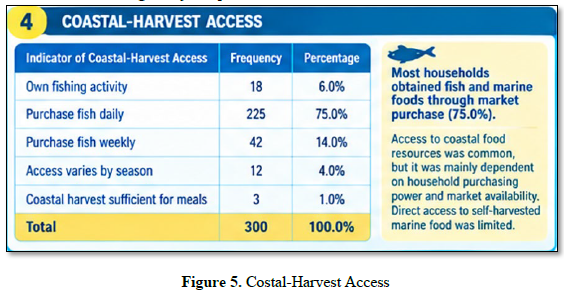
Most households obtained fish and marine foods through market purchase rather than direct fishing. Daily fish purchase was reported by 75.0% of households, while 14.0% purchased fish weekly. Only 6.0% reported engaging in their own fishing activity.
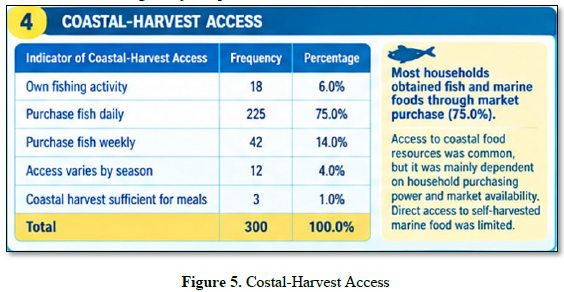
These results indicate that access to coastal food resources was common, but it was mainly dependent on household purchasing power and market availability. Direct access to self-harvested marine food was limited among the participating households.
Dietary Diversity
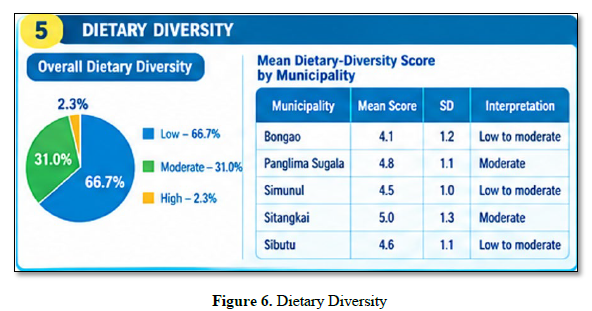
Low dietary diversity was observed among 200 children, representing 66.7% of the sample. Moderate dietary diversity was found among 31.0%, while only 2.3% were classified as having high dietary diversity.
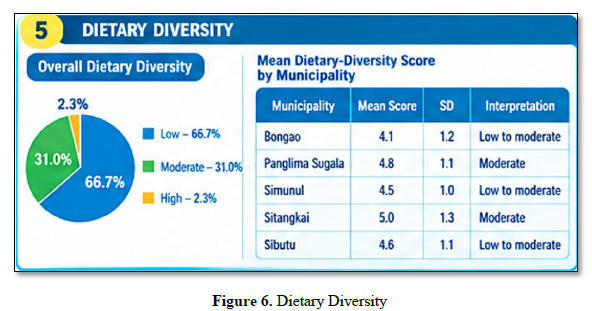
Mean dietary-diversity scores differed across municipalities. Sitangkai recorded the highest mean score of 5.0, followed by Panglima Sugala at 4.8. Bongao had the lowest mean score at 4.1.
The generally low dietary-diversity scores imply that many children consumed limited varieties of foods. This is important because Philippine evidence supports dietary diversity as a useful predictor of micronutrient adequacy among young children.
Nutritional Status
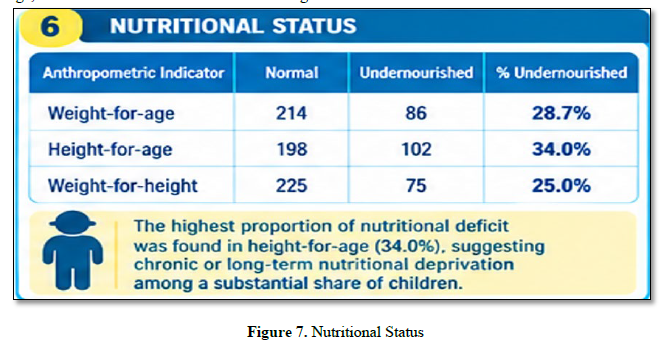
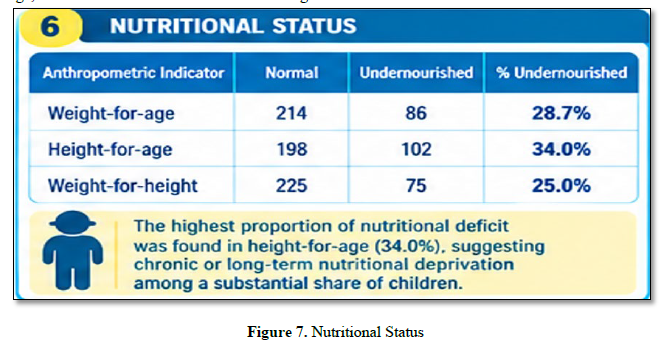
The anthropometric findings showed that undernutrition remained evident in the sampled communities. Based on weight-for-age, 86 children or 28.7% were underweight. Stunting, measured through height-for-age, affected 102 children or 34.0%. Wasting, based on weight-for-height, was observed among 75 children or 25.0%.
The highest proportion of nutritional deficit was found in height-for-age, suggesting the presence of chronic or long-term nutritional deprivation among a substantial share of children. WHO growth standards recognize height-for-age, weight-for-age, and weight-for-height as core measures of child growth and nutritional status.
Coastal Access and Diversity
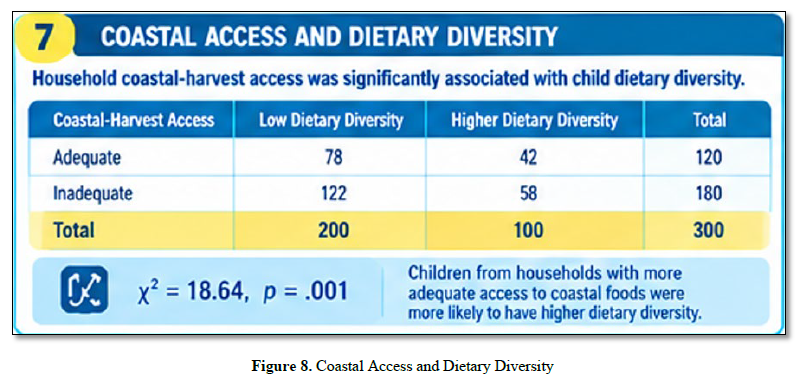
Household coastal-harvest access was significantly associated with child dietary diversity.
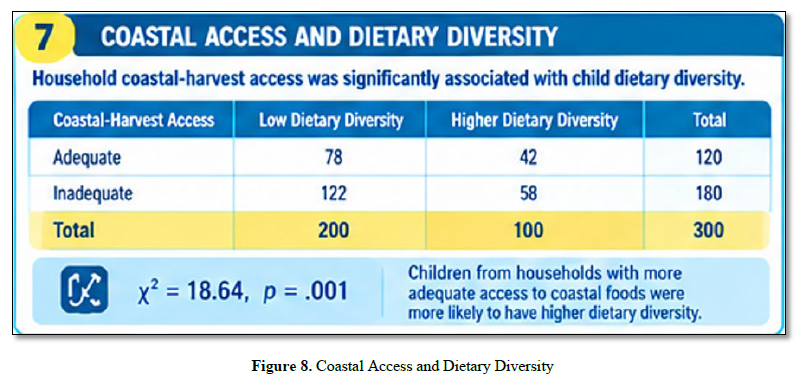
The chi-square test result showed a statistically significant relationship between coastal-harvest access and dietary diversity, χ2=18.64\chi^2 = 18.64χ2=18.64, p=.001p = .001p=.001. Children from households with more adequate access to coastal foods were more likely to have higher dietary diversity than children from households with inadequate access.
Dietary Diversity and Nutrition
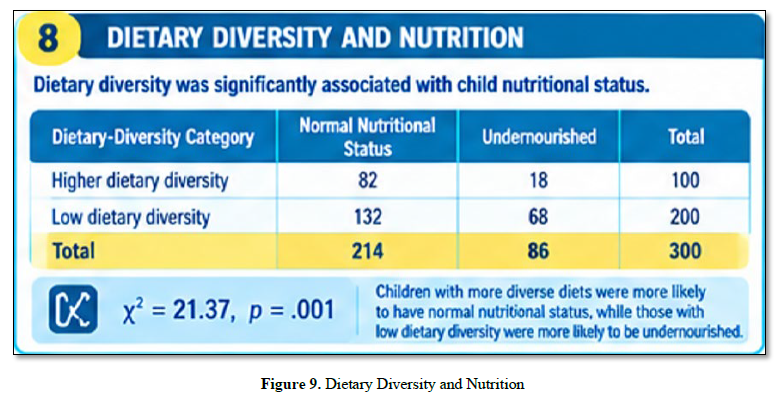
Dietary diversity was significantly associated with child nutritional status.
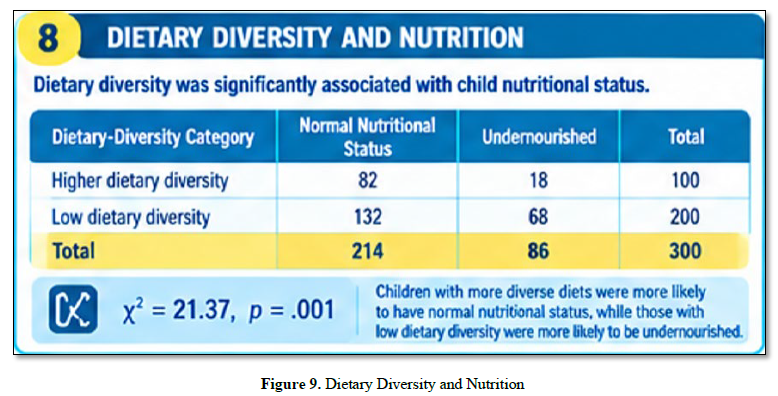 The chi-square analysis indicated a statistically significant relationship between dietary diversity and nutritional status, χ2=21.37\chi^2 = 21.37χ2=21.37, p=.001p = .001p=.001. Children with more diverse diets were more likely to have normal nutritional status, while children with low dietary diversity were more likely to experience undernutrition.
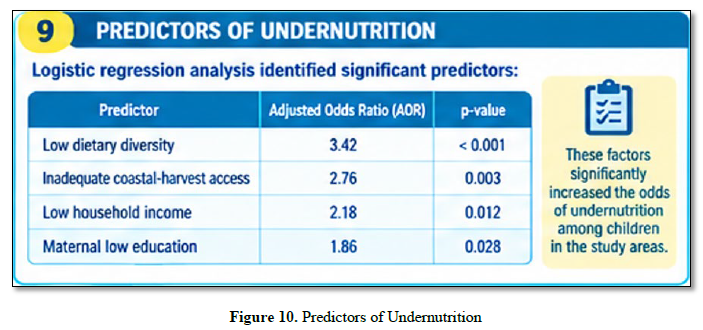
Predictors of Undernutrition
Logistic regression analysis identified five significant predictors of child undernutrition.
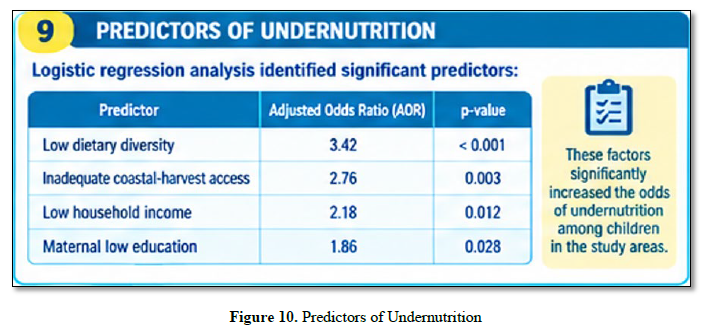
All odds ratios were below 1.00, indicating protective associations. Adequate access to coastal foods, greater dietary diversity, higher maternal education, improved household income, and better food security were associated with lower odds of child undernutrition.
DISCUSSION
The findings demonstrate that child nutrition in the selected coastal municipalities of Tawi-Tawi was shaped by the interaction of food access, dietary quality, and household socioeconomic conditions. Although fish and other coastal foods were widely available through local markets, many households remained dependent on daily purchase rather than direct harvesting. This dependence may make diets vulnerable to price changes, weather conditions, income instability, and seasonal fluctuations in fish supply.
The high proportion of children with low dietary diversity suggests that access to fish alone does not assure balanced child diets. Children require diverse foods, including staples, legumes, fruits, vegetables, eggs, meat or fish, and other nutrient-dense foods. The finding supports previous Philippine evidence that dietary diversity is a useful indicator of micronutrient adequacy among children.
The significant association between coastal-harvest access and child dietary diversity suggests that coastal food systems can contribute positively to child feeding. Households that can more consistently access fish and marine foods may have greater opportunity to include animal-source foods in children’s diets. However, the relationship should not be interpreted as causal because of the cross-sectional design.
The significant association between dietary diversity and nutritional status indicates that diet quality is an important factor in preventing undernutrition. Children with more diverse diets were less likely to be classified as undernourished. This finding reinforces the importance of promoting food variety rather than focusing solely on the quantity or availability of staple foods.
Maternal education, household income, and food security were also significant predictors of nutritional status. These findings emphasize that nutrition interventions should address both food availability and food utilization. Coastal-livelihood initiatives may be strengthened by integrating nutrition education, household budgeting, diversified food production, child-feeding counseling, and growth monitoring.
CONCLUSION
Children in the selected coastal municipalities of Tawi-Tawi experienced substantial levels of low dietary diversity and undernutrition. Stunting was the most prevalent anthropometric concern, indicating that many children may have experienced long-term nutritional deprivation.
Household access to coastal harvests was significantly associated with better child dietary diversity. Dietary diversity, in turn, was significantly associated with normal nutritional status. Adequate coastal-food access, maternal education, household income, and food security were all associated with reduced odds of child undernutrition.
Coastal food resources can support child nutrition, but their benefits depend on whether households can consistently access, afford, prepare, and provide these foods as part of diverse and age-appropriate child diets. Nutrition-sensitive coastal development programs should therefore combine fisheries and livelihood support with caregiver education, food-security interventions, and routine child-growth monitoring.
RECOMMENDATIONS
Future studies should use larger and probability-based samples, standardized dietary-diversity scoring procedures, and longitudinal designs to determine whether improvements in coastal-food access produce sustained changes in dietary diversity and child nutritional outcomes.

No Files Found


Internationally Accepted
Share Your Publication :