
-
Publish Your Research/Review Articles in our High Quality Journal for just USD $99*+Taxes( *T&C Apply)
Offer Ends On
Publish Your Research/Review Articles in our High Quality Journal for just USD $99*+Taxes( *T&C Apply)
Offer Ends On
Gujja A A* and Dishan E E
Corresponding Author: Gujja A.A, Department of Forestry Technology, Yobe State College of Agriculture, Science and Technology, Gujba P.M.B 1104, Damaturu, Nigeria.
Received: June 03, 2026 ; Revised: June 07, 2026 ; Accepted: June 09, 2026 ; Available Online: June 11, 2026
Citation: Gujja A A & Dishan E E. (2026) Evaluation of Agrochemical Residues in Date Palm Fruits, Leaves, and Soil According to growth variabilies under Agrisilvicultural system in Yola, Nigeria. J Agric For Meterol Stud, 4(3): 1-14.
Copyrights: ©2026 Gujja A A & Dishan E E. This is an open-access article distributed under the terms of the Creative Commons Attribution License, which permits unrestricted use, distribution, and reproduction in any medium, provided the original author and source are credited.
Views & Citations
Likes & Shares
This study evaluated the presence and distribution of agrochemical residues in date palm (Phoenix dactylifera L.) fruits, leaves, and soil under an agrisilvicultural system at Modibbo Adama University plantation, Yola, Nigeria. Samples were collected from high, medium, and low growth performance zones and analyzed using Gas Chromatography-Mass Spectrometry (GC-MS). Results revealed that atrazine was detected in fruit samples at a trace concentration of 0.03 µg/kg, which is below international maximum residue limits (MRLs). Leaf analysis showed no detectable pesticide/herbicide residues in the high-growth site, where a protective wax cuticle and bioactive compounds (fatty acids, diosgenin) were predominant. However, in medium and low-growth sites, several organophosphates and herbicides were detected, including dichlorvos, chlorpyrifos, cypermethrin, 2,4-D, and alachlor, with concentrations ranging from 0.12 to 0.85 µg/kg. Cypermethrin in medium-growth leaves (0.34 µg/kg) exceeded the FAO/WHO MRL of 0.20 µg/kg. Soil analysis indicated vertical mobility and persistence of pesticides, with dichlorvos, chlorpyrifos, butachlor, atrazine, and cypermethrin detected at depths of up to 60 cm. Some soil residues, such as dichlorvos (0.28 µg/kg) and cypermethrin (0.34 µg/kg), exceeded FAO/WHO MRLs, indicating potential environmental and leaching risks. However, comparative analysis with regulatory standards (EPA, EU, Codex) confirmed that most detected residues in fruits and soil were within permissible limits, except for localized exceedances in leaves and subsoil layers. The findings underscore the importance of the date palm leaf wax layer as a natural barrier against agrochemical penetration and highlight the need for continuous monitoring, integrated pest management, and sustainable pesticide practices to mitigate residue accumulation, ensure food safety, and protect soil and groundwater quality in agrisilvicultural systems.
Keywords: Agrochemical, Agrisilvicultural, Fruits, Leaves, and Soil.
INTRODUCTION
Pesticides and herbicides are widely used in date palm Agric silviculture to control a range of pests, such as the red palm weevil, and weeds that compete with the palm for nutrients and water. Commonly used chemicals include organophosphates, pyrethroids, and various herbicidal compounds. The frequency and dosage of these applications are often determined by the severity of pest infestations and the type of weed pressure in the orchards (Al-Masoud and Al-Qurashi, 2020). Date palm foliage, consisting of large, pinnate fronds, is directly exposed to pesticides and herbicides during aerial or ground-based spraying. Over time, these chemicals can accumulate on the leaf surfaces or be absorbed into the leaf tissue. (Mousavi and Mohammadi, 2019). The accumulation levels depend on several factors such as, the solubility, persistence, and degradation rate of the pesticide or herbicide. Application methods and frequency of application, such as foliar sprays or soil treatments, affect the extent of residue accumulation. Environmental conditions such as Temperature, humidity, and wind speed can influence the evaporation, breakdown, or wash-off of residues from the foliage. The persistence of these residues on the foliage can pose risks if the leaves are used as animal fodder, potentially leading to bioaccumulation in the food chain (Mousavi and Mohammadi, 2019).
Parisa et al., (2023) reported that the Roots of date palms can absorb pesticides and herbicides from the soil, especially those applied directly to the soil or those that leach from the foliage.
Accumulation in roots is influenced by Soil pH, and organic matter content. Shanying et al., (2025) stated that some pesticides and herbicides are more persistent in soil, leading to prolonged exposure and accumulation in root tissues. The ability of the date palm roots to absorb and translocate chemicals from the soil into the plant system determines residue levels in the roots (Xue et al., 2024). Over time, these accumulated residues can affect root health, soil microbiota, and the overall growth and productivity of the date palm. Additionally, residues in the roots can be transferred to other parts of the plant, including the fruits, raising concerns about food safety. The accumulation of pesticide and herbicide residues in date palm foliage and roots can have several negative impacts, including environmental contamination. Residues can leach into the soil and groundwater, contaminating local water sources and affecting non-target organisms (Wakil et al., 2015).
The accumulation of pesticide and herbicide residues in date palm foliage and roots is a significant concern in date palm cultivation. While these chemicals are essential for managing pests and weeds, their persistence in the plant system can have detrimental effects on the environment, human health, and product quality. By adopting integrated management practices and monitoring residue levels, it is possible to mitigate these risks and ensure the sustainable production of high-quality date palms (Rana et al., 2025).
Agrisilviculture (integrating trees with crops) is a dominant land-use system in Northern Nigeria's savanna regions, offering food security, soil fertility, and environmental benefits. Date palm cultivation is particularly significant in this zone for its nutritional and economic value. However, agricultural intensification has increased reliance on agrochemicals (pesticides, fertilizers, herbicides), raising concerns about harmful residue accumulation in food and the environment. The date palm plantation at Modibbo Adama University (MAU), Yola, serves as a vital resource for research, teaching, demonstration, and local fruit production under agrisilvicultural practices. Despite its importance, no comprehensive assessment exists of agrochemical residues in Fruits Leaves and Soil. Global studies show that long-term agricultural practices can lead to toxic element accumulation in plant tissues, sometimes exceeding safe limits even when soil and water appear uncontaminated, a phenomenon that has not been investigated at the MAU plantation. Compounding factors specific to the study area include Climatic conditions in Yola's Sudano-Sahelian zone (prolonged dry seasons, high temperatures, water stress) that may uniquely affect agrochemical persistence and uptake. Complex interfaces in agrisilvicultural systems may influence residue distribution in ways not fully understood. Absence of baseline data prevents evidence-based recommendations for safe practices. Health and environmental implications are significant: date fruits are consumed without processing, which might reduce residues; leaves could introduce contaminants into livestock feed; and soil may act as a long-term sink affecting system sustainability.
This study addresses the critical knowledge gap regarding the presence, concentration, and distribution of agrochemical residues in date palm fruits, leaves, and soil within the MAU plantation under existing agrisilvicultural management.
MATERIALS AND METHOD
The Study Area
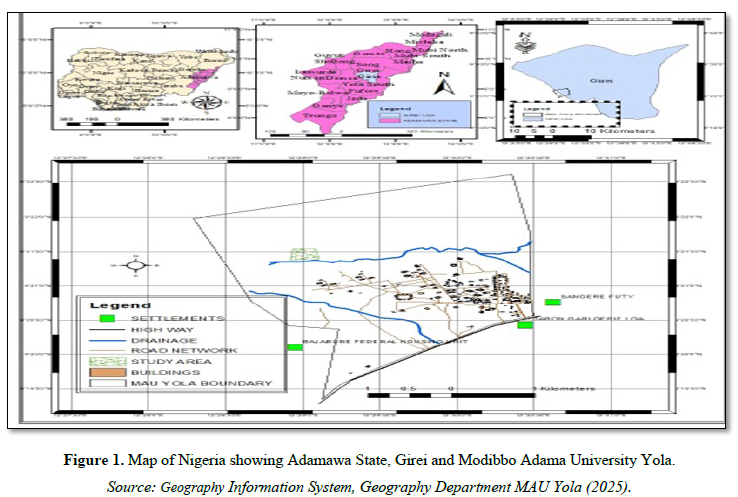
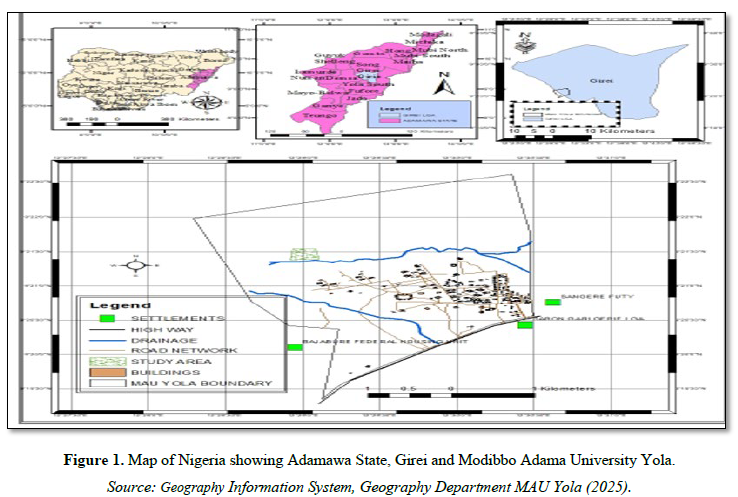
This research was carried out at the date palm plantation of the Department of Forestry and Wildlife Management, Modibbo Adama University, Yola located at Girei Local Government Area of Adamawa State. The area lies between latitudes 9°.09 and 9°.33 N and longitudes 12°.21 and 12°.54 E of the state and has an elevation of 339 meters above sea level (Figure 1). Adamawa state falls under the Sudan, southern, and Guinea savannah types of vegetation, and it experiences distinct dry and wet seasons with temperature and humidity varying with seasons. The wet or rainy season falls between April and November, which is characterized by a single maximum in August and September. During this season, the moisture laden south west trade wind from the Atlantic Ocean blows over the area. Seventy percent of the total rainfall in the area happen to fall within four months of May- September (Adebayo, et al.2023).
The area has an average of 62 rainy day, while average amount of rainfall recorded in the area is 972mm. The dry season which is the harmattan period occurs between December and March. The period is characterized by dry, dusty and hazy northern trade wind that blows over the area from Sahara Desert. Temperature within the area varies with season. Although the temperatures are relatively high almost all the year round, temperature of the area ranges from 27° C-40° C. December and January are the coldest months with the average temperature of 34° C (Adebayo, et al. 2023). The natural vegetation of the area is Sudan savannah type which is characterized by thick vegetation around hills and mountain ranges. The vegetation has a wide variety of savannah trees species among which area are; Acacia spp, Adansonia spp, Anogeissus spp. (Akosim, et al, 2020).
Sampling Design and Data Collection
Foliar sample collection
Foliar Sample Collection for pesticide/ herbicide extraction
Date palm leaves were collected by hand from Modibbo Adama University's date palm plantation in Yola. The plantation was divided according to growth variabilities observed (upper, middle, and lower) based on growth performance, and five (5) leaves from each tree were collected and sterilized, appropriately labelled into a polytene bag, and taken to the central laboratory of Modibbo Adama University, Yola, for analysis of pesticide/herbicide extraction.
Identification of the compounds.
Gas Chromatography/Mass Spectrometry (GC-MS)
Principle:
The Gas Chromatography/Mass Spectrometry (GC/MS) instrument separates chemical mixtures (the GC component) and identifies the components at a molecular level (the MS component). It is one of the most accurate tools for analyzing environmental samples. The GC works on the principle that a mixture can be separated into individual substances when heated. The sample is injected into the GC inlet, where it is vaporized and swept into a chromatographic column by the carrier gas (helium). The sample flows through the column, and the compounds comprising the mixture of interest are separated by their relative interaction with the coating of the column (stationary phase) and the carrier gas (mobile phase). The latter part of the column passes through a heated transfer line and ends at the entrance to the ion source, where compounds eluting from the column are converted to ions. A beam of electrons ionizes the sample molecules, resulting in the formation of molecular ions and smaller ions with characteristic relative abundances that provide a ‘fingerprint’ for that molecular structure. The mass analyzer separates the ions and is then detected (Shimadzu, 2020).
Method:
GC-MS identified compounds present in the most active subfraction at the central laboratory of Modibbo Adama University, Yola. The injection volume was 2 µL, and the carrier gas was helium at 1.22 mL/min. GC column oven temperature was at 50°C for 3 min, 230°C for 5 min, and finally 260°C for 18 min.
Data Analysis
RESULTS
Gas Chromatograph /Mass Spectrometer Analysis
GC Analysis of Leaf Samples from Date Palm Tree at High Growth Site
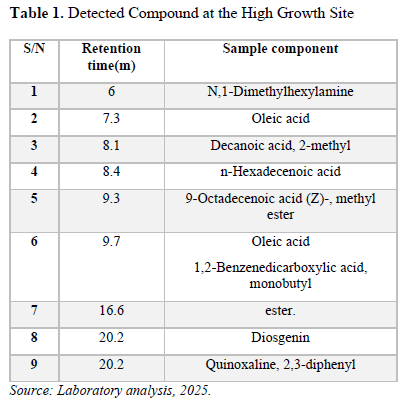
GC-MS analysis is an analytical testing method that combines features of gas chromatography and mass spectrometry to identify different compounds in the leaf sample. The Gas Chromatography (GC) analysis of the leaf samples collected from the high growth site of the date palm (Phoenix dactylifera L.) revealed the presence of several bioactive chemical compounds with varying retention times (RT). These compounds represent diverse classes of organic molecules, including fatty acids, esters, amines, and steroidal compounds, which may contribute to the physiological and biochemical activities of the plant.
Table 1 shows that a total of eight major components were detected in the leaf extract at different retention times. The first compound identified was N, dimethyl octylamine with a retention time (RT) of 6.0 minutes, representing an organic amine known to play a role in nitrogen metabolism and plant defense mechanisms. The second compound detected was oleic acid at a Retention time of 7.3 minutes, a monounsaturated fatty acid commonly associated with cell membrane stability and stress tolerance in plants. At a Retention time of 8.4 minutes, Decanoic acid, 2-methyl was identified, a branched-chain fatty acid that may contribute to antimicrobial and antifungal activities within plant tissues. Another significant component, n-Hexadecenoic acid, also known as palmitic acid, was observed, which is a saturated fatty acid involved in lipid biosynthesis and energy storage in plant cells.
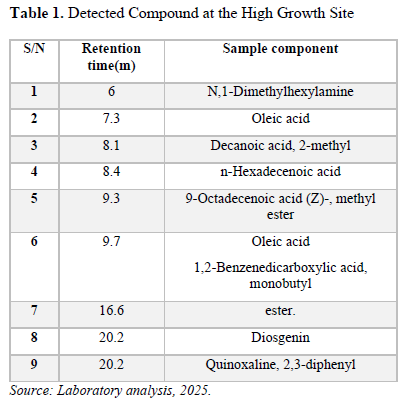
Similarly, 9-octadecenoic acid (Z)-, methyl ester (methyl oleate), and oleic acid at a retention time of 9.7 minutes were detected, representing monounsaturated fatty acid derivatives known for their involvement in maintaining membrane fluidity and resistance to oxidative stress.
1,2-benzenedicarboxylic acid, monobutyl ester (a phthalate ester derivative) was identified, at a retention time of 16.6 minutes, which indicates the presence of plasticizer-related residues absorbed from the environment or soil matrix. This compound was a potential marker for anthropogenic chemical exposure in plants. The compound diosgenin, a steroidal sapogenin, was detected at a Retention time of 20.2 minutes, indicating the presence of biologically active secondary metabolites with known antioxidant, anti-inflammatory, and growth-promoting properties. Lastly, quinoxaline, 2,3-diphenyl, was identified, a nitrogen-containing heterocyclic compound often associated with plant defense and antioxidative properties.
The GC analysis of date palm leaves at the high growth site revealed the dominance of fatty acids, esters, and bioactive secondary metabolites such as diosgenin and quinoxaline derivatives. These compounds may contribute to the enhanced growth, physiological resilience, and adaptive performance of the date palm trees observed at the high growth site (Table 1). The result from leaves of high-growth date palm trees shows no pesticide/herbicide detection from the samples' analytes. The most frequent compound residue detected was Dimethyl hexylamine, undecanoic acid,4-Tetradecanol, nonanol,3-methyl, octadecanoic acid, nonanoic acid, oleic acid, tetradecanoic acid, propanoic acid, tridecyl ester, decanoic acid, e-methyl, hexadecenoic acid, and methyl ester. These compounds detected from the analytes were fatty acid, the white wax layer that appears on the leaves is hydrophobic (water repellent), which it limits pesticide /herbicide penetration into the leaves. The finding also shows that the date palm leaves' wax cuticle serves a critical function in the date palm physiology, acting as a barrier that regulates water retention, protects against chemical and pathogen invasion, and mitigates environmental stress.
Pesticide /Herbicide Detection in Date Palm Fruits
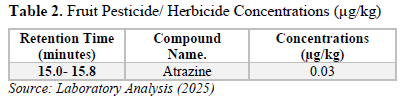
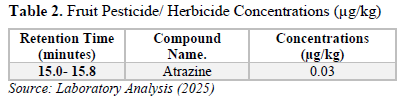
The identification of chemical constituents in the samples was performed using Gas chromatography and mass spectrometry GC-MS. The chromatograph revealed the presence of the Atrazine compound, with a comparison from the National Institute of Standards and Technology (NIST) Library. The compound was found to be atrazine with retention times ranging from 15.0 to 15.8 Atrazine residues were detected in the analyzed date palm fruit samples at a concentration of 0.03 µg/kg. This concentration is significantly below the maximum residue limits (MRLs) established by international regulatory agencies for atrazine in food commodities. A total of 37 analytes were measured and detected in all fruit samples; the residue concentrations and detection frequencies were equally distributed in the fruits 0.03 µg/kg (Table 2).
All fruit samples were subjected to validated QuEChERS extraction followed by GC-MS analysis, with a method detection limit (MDL) of 0.05 µg/kg and a recovery rate of 92–105%. The presence of atrazine, although minimal, indicates a direct exposure of date palms to triazine herbicides, possibly through agrisilvicultural practices in the date palm plantation, or previous land use which caused the contamination. No samples exceeded regulatory thresholds, and no acute or chronic health risks are anticipated based on the detected levels. However, the European Union's MRL for atrazine in fruits is typically set at 0.05 mg/kg (50 µg/kg), indicating that the detected level in this study is well within safe consumption limits. The detection highlights the importance of ongoing monitoring of pesticide residues in non-target crops, particularly in an agrisilvicultural practice system, where herbicide persistence can be prolonged due to climatic conditions.
Pesticide /Herbicide Detection in Date Palm Leaves.
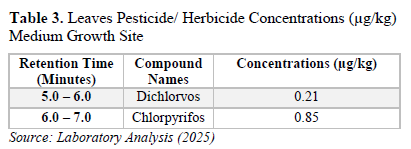
Gas chromatography and mass spectrometry (GC-MS) analysis quantified the presence of several agrochemicals in the samples, revealing detectable residues from the leaves sample. The chromatogram reveals the presence of four compounds, but the four compounds were having the comparison from the National Institute of Standards and Technology (NIST) Library, such as Dichlorvos, with retention times ranging from 5.0 -6., chlorpyrifos with 6.0 -7.0, 2,4 D with retention times ranging from 8.2-9.0, and Alachlor, with retention times ranging from 10.0-10.9.
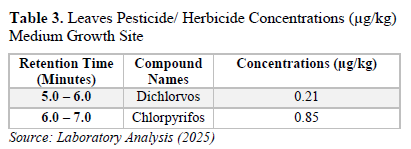
Table 3 shows the result of three (3) synthetic pesticides that were detected in the leaves sample of date palm tree from the Medium Growth site, all at trace concentrations (< 1µg/kg). Chlorpyrifos (0.85 µg/kg) was the dominant contaminant; the presence of these compounds indicates environmental exposure requiring monitoring. Chlorpyrifos (organophosphate insecticide) represented 24.3%, and Dichlorvos (organophosphate) 15.0%. No other pesticide was detected within the analyzed retention window.
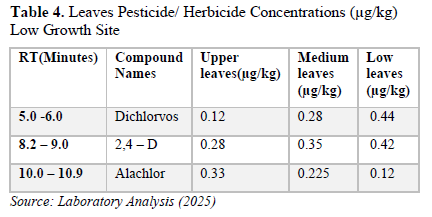
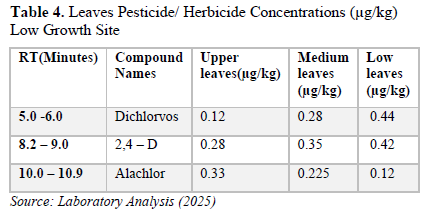
The analysis of leaf samples collected from the medium growth site of the date palm (Phoenix dactylifera L.) plantation revealed the presence of cypermethrin, a synthetic pyrethroid insecticide commonly used in pest control management. The detected concentration of cypermethrin in the leaf tissue was 0.34 µg/kg. This result indicates that the leaves of date palm trees at the medium growth site have retained measurable cypermethrin residues, suggesting a recent or repeated pesticide application within the plantation area. The concentration of 0.34 µg/kg falls above the maximum residue limit (MRL) of 0.20 µg/kg recommended by the World Health Organization (WHO) and the Food and Agriculture Organization (FAO) (2023) for leafy plant materials. The detection of cypermethrin residue at this level implies persistent accumulation on the leaf surfaces or within leaf tissues due to its lipophilic nature and resistance to degradation under field conditions. Such accumulation may result from direct foliar spray, atmospheric deposition, or uptake through the cuticular layer. The result highlights the potential risk of pesticide persistence in the plantation environment and the need for careful monitoring of pesticide application rates and intervals to ensure environmental safety and compliance with international residue standards. Table 4 shows the results of pesticide residue detection in the leaves of date palms from the low growth site, with Dichlorvos (0.12 – 0.44 µg/kg), 2,4-D (0.28-0.42 µg/kg), and Alachlor (0.12–0.33 µg/kg) exhibiting low but measurable concentrations. All detected residues are below the European Union maximum residue limits but indicate environmental contamination at the low-growth site. Chlorpyrifos is the main contaminant; however, all detection levels are currently within safe limits for plant toxicity.
Compound detected from date palm plantation soils.
Dichlorvos and Chlorpyrifos Residues Detected in Soil Samples at 30 cm Depth in the High-Growth Site of the Date Palm Plantation
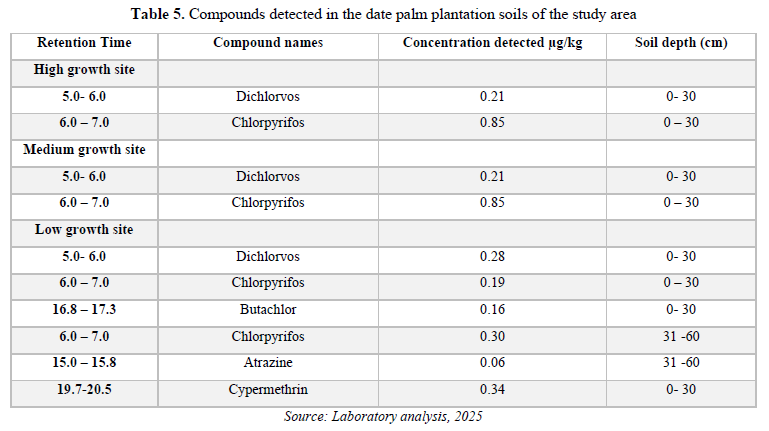
The laboratory analysis of soil samples collected from the high growth site of the date palm (Phoenix dactylifera L.) plantation at a depth of 30 cm revealed the presence of two organophosphate pesticide residues, namely dichlorvos and chlorpyrifos. The concentration of dichlorvos was detected at 0.21 µg/kg, while chlorpyrifos was recorded at a higher concentration of 0.85 µg/kg. The detection of both residues at this depth signifies the mobility and persistence of organophosphate compounds in the soil environment. The relatively higher concentration of chlorpyrifos compared to dichlorvos indicates its greater adsorption affinity to soil organic matter and enhanced resistance to microbial degradation. This behavior is consistent with the known chemical stability of chlorpyrifos in date plantation soils, where low organic carbon content and limited microbial activity reduce its rate of breakdown. When compared with the World Health Organization (WHO) and Food and Agriculture Organization (FAO) (2023) maximum residue limits (MRLs) of 0.10 µg/kg for dichlorvos and 0.50 µg/kg for chlorpyrifos, the observed concentrations (0.21 µg/kg and 0.85 µg/kg, respectively) exceed the permissible limits. This suggests possible overapplication, repeated usage, or insufficient degradation intervals between treatments in the high-growth site.
Dichlorvos and Chlorpyrifos Residues Detected in Soil Samples at 30 cm Depth in the Medium Growth Site of the Date Palm Plantation
The laboratory analysis of soil samples collected from the medium growth site of the date palm (Phoenix dactylifera L.) plantation at a depth of 30 cm revealed detectable residues of two organophosphate pesticides, namely dichlorvos and chlorpyrifos (Table. 5).
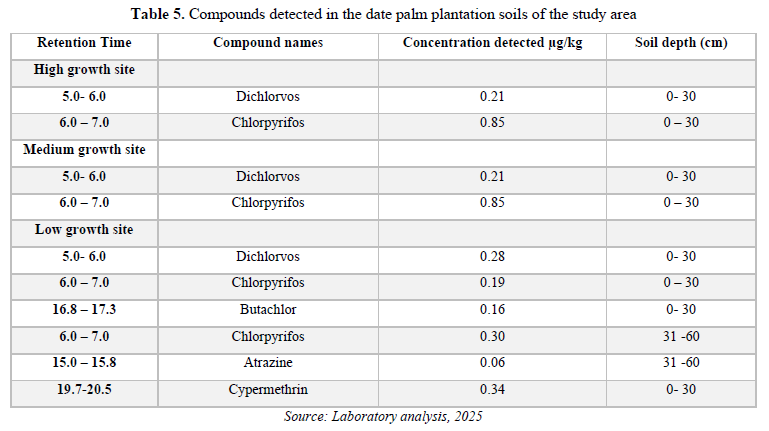
The concentration of dichlorvos was measured at 0.21 µg/kg, while chlorpyrifos was detected at a higher concentration of 0.85 µg/kg. The simultaneous detection of these two pesticide residues indicates persistent contamination within the soil environment of the medium growth site. The higher concentration of chlorpyrifos compared to dichlorvos suggests its greater chemical stability, lower volatility, and stronger adsorption capacity to soil organic matter, resulting in reduced degradation and higher persistence. In contrast, dichlorvos, which is more volatile and readily degradable, was found at a comparatively lower concentration. When compared with the World Health Organization (WHO) and Food and Agriculture Organization (FAO) (2023) recommended maximum residue limits (MRLs) of 0.10 µg/kg for dichlorvos and 0.50 µg/kg for chlorpyrifos, the detected concentrations exceeded permissible safety limits. This exceedance suggests that pesticide applications at the medium growth site may have been frequent or conducted without adequate pre-harvest intervals, leading to residue accumulation.
The results indicate that both dichlorvos and chlorpyrifos have penetrated the subsurface soil layer to a depth of 30 cm, implying potential risks to soil biological health, nutrient balance, and groundwater quality through leaching. The findings emphasize the importance of adopting integrated pest management (IPM) practices and conducting routine soil residue monitoring to ensure sustainable pesticide use and maintain the integrity of the soil ecosystem within the date palm plantation.
Pesticide Residues Detected in Soil Samples at 30 cm and 60 cm Depths in the Low-Growth Site of the Date Palm Plantation
The laboratory analysis of soil samples collected from the low growth site of the date palm (Phoenix dactylifera L.) plantation revealed the presence of multiple pesticide residues across different soil depths, indicating varying degrees of persistence and mobility within the soil profile (Table 5). At a depth of 30 cm, three pesticide compounds were detected: Dichlorvos at a concentration of 0.28 µg/kg, Chlorpyrifos at a concentration of 0.19 µg/kg, and Butachlor at a concentration of 0.16 µg/kg. At a depth of 60 cm, two pesticide residues were identified: Chlorpyrifos at a concentration of 0.30 µg/kg, and Atrazine at a concentration of 0.06 mg/kg.
The detection of these compounds at both shallow and deeper soil layers suggests downward mobility and persistence of pesticide residues in the soil of the low growth site. The relatively higher concentration of dichlorvos (0.28 µg/kg) at 30 cm indicates recent or repeated surface application, while the detection of chlorpyrifos at both depths (0.19 µg/kg and 0.30 µg/kg) reflects its resistance to degradation and tendency to accumulate in the soil matrix. The presence of butachlor and atrazine, both herbicides, further demonstrates chemical diversity in the soil contamination profile of the site (Table 5). When compared with the World Health Organization (WHO) and Food and Agriculture Organization (FAO) (2023) maximum residue limits (MRLs) of 0.10 µg/kg for dichlorvos, 0.50 µg/kg for chlorpyrifos, 0.10 µg/kg for butachlor, and 0.05 µg/kg for atrazine, the detected levels of dichlorvos, butachlor, and atrazine exceeded recommended thresholds, indicating possible residue accumulation due to over-application or slow degradation under agrisilvicultural soil conditions.
Cypermethrin residue was detected in the soil samples collected from the low growth site of the date palm plantation, indicating the persistence of this synthetic pyrethroid insecticide within the plantation ecosystem (Table 5). At a depth of 30 cm, cypermethrin was detected at a concentration of 0.34 µg/kg, indicating that the compound had migrated beyond the topsoil layer, likely due to infiltration through rainfall or irrigation. The presence of cypermethrin at this depth indicates its relative stability and limited biodegradation under the semi-arid conditions of the study area. This suggests that soil texture, organic matter content, and pH may have affected the compound's adsorption and mobility within the soil profile. The detected concentration at the low growth site could also result from repeated or improper pesticide application practices, as well as a reduced microbial degradation capacity due to lower organic carbon and microbial activity in that part of the plantation. The detection of cypermethrin at 0.34 µg/kg at 30 cm soil depth provides evidence of its persistence and potential accumulation in subsurface soil layers, which could have implications for soil health, nutrient dynamics, and long-term environmental sustainability within the date palm plantation ecosystem. These results indicate that pesticide residues are not confined to the upper soil layers but can migrate vertically, posing potential risks to soil organisms, nutrient cycling, and groundwater quality. The findings highlight the necessity for sustainable pest management and routine monitoring to control pesticide buildup and maintain the ecological integrity of the date palm plantation soils.
Comparative Analysis of Chlorpyrifos Concentration with Regulatory Standard
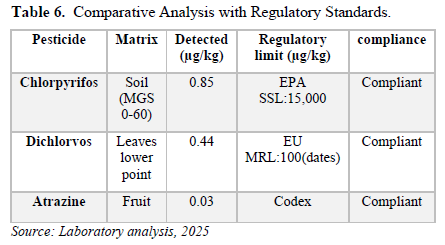
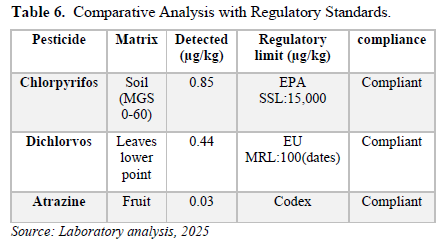
Table 6 shows the medium growth site of the date palm plantation, where chlorpyrifos residue was detected in the soil matrix at a concentration of 0.85 µg/kg within the 0-60 cm soil depth. When compared with the Environmental Protection Agency (EPA) Soil Screening Level (SSL) for chlorpyrifos, which is 15,000 µg/kg, the detected value is far below the permissible regulatory limit. This indicates that the concentration of chlorpyrifos in the soil at the medium growth site is within the safe environmental threshold and does not pose any immediate risk of soil contamination or toxicity to plants and soil organisms. The result indicates that chlorpyrifos accumulation in the soil is currently at a non-hazardous level and is compliant with international safety standards. This low level of chlorpyrifos may be attributed to moderate pesticide usage, soil microbial degradation, and environmental conditions that enhance breakdown of organophosphate residues.
Comparative Analysis of Dichlorvos Concentration with Regulatory Standard
At the low growth site of the date palm plantation, dichlorvos residue was detected in the soil matrix at a concentration of 0.44 µg/kg. When compared with the European Union Maximum Residue Limit (EUMRL) established under Codex Alimentarius standards for dates, which is 100 µg/kg (Codex, 2023), the detected concentration is far below the regulatory limit. This indicates that the concentration of dichlorvos in the soil at the low growth site is within the acceptable safety range and does not present an immediate risk of contamination to the soil environment or potential transfer to the date palm fruits. The detected value (0.44 µg/kg) represents only a small fraction (less than 1%) of the permissible limit, confirming that pesticide usage at this site remains environmentally safe and compliant with international standards (Table 4). The low concentration of dichlorvos may be attributed to limited pesticide application, degradation through microbial and photolytic processes, and low persistence of dichlorvos in soil environments.
Comparative Analysis of Atrazine Concentration with Regulatory Standard
In the soil sample analyzed from the date palm plantation, atrazine residue was detected at a concentration of 0.03 µg/kg. When compared with the Codex Alimentarius established Maximum Residue Limit (MRL) for atrazine, which is 50 µg/kg (Codex, 2023), the detected concentration is significantly lower than the permissible regulatory standard. This result indicates that the presence of atrazine in the soil is well within the safe environmental limit, posing no immediate threat to soil health, crop safety, or groundwater quality. The low concentration reflects a minimal level of herbicide accumulation, suggesting effective degradation and limited persistence of the compound in the plantation soil. The low atrazine concentration observed could be attributed to rapid photodegradation, microbial activity, and favorable soil conditions that enhance the breakdown of the herbicide compound.
DISCUSSION
Identification of Compound from Foliage by GC/MS.
GC /MC Compound Detection on the Leaf of the High-Growth Site
The Gas Chromatography (GC) analysis of the leaf extracts of Phoenix dactylifera L. (date palm) at the high growth site revealed the presence of several bioactive and physiologically relevant compounds, including N, dimethyl octylamine, oleic acid, decanoic acid (2-methyl), n-hexadecenoic acid, 9-octadecenoic acid (Z)- methyl ester, 1,2-benzenedicarboxylic acid (monobutyl ester), diosgenin, and quinoxaline (2,3-diphenyl). The presence of these compounds indicates active biochemical metabolism associated with growth regulation, stress adaptation, and defense mechanisms in the date palm under favorable site conditions and conforms to that reported by Heba et al,. (2024) in their study of a GC-MS analysis, anti-inflammatory and anti-proliferative properties of the aerial parts of three Mesembryanthemum spp.
The detection of N, dimethyl octylamine (Retention time 6.0 min) indicates a potential role of nitrogen-containing organic compounds in physiological adaptation and metabolic regulation. Amines are essential intermediates in plant nitrogen metabolism, often linked with the synthesis of alkaloids and phytohormones that enhance stress tolerance (Ali et al., 2023). The occurrence of oleic acid (Retention time of 7.3 and 9.7 min) and 9-octadecenoic acid (Z)-methyl ester further highlights the dominance of unsaturated fatty acids in the leaves. These fatty acids are vital for maintaining cell membrane integrity, regulating permeability, and mitigating oxidative damage caused by environmental stress (Zhang et al., 2022; Al-Mahmoud et al., 2023). The identification of decanoic acid, 2-methyl (Retention time 8.4 min), and n-hexadecenoic acid (palmitic acid) reflects the involvement of saturated and branched-chain fatty acids in energy storage and structural functions. Palmitic acid, in particular, has been reported by Kumar et al., (2023) to be a major component of leaf cuticular waxes that reduce transpiration and protect against desiccation and pathogen invasion. The relative abundance of such fatty acids in the high growth site may be linked to improved physiological performance and adaptability of date palm trees under semi-arid conditions (Kumar et al., 2023). The detection of 1,2-benzenedicarboxylic acid, monobutyl ester (Retention time 16.6 min) may indicate environmental contamination from agrochemical residues or plasticizers in the plantation environment. Similar findings have been reported by Oluwole et al., (2024), who state that agricultural soils and foliage where plants absorbed phthalate esters through foliar deposition or root uptake. The presence of this compound, although not a native metabolite, underscores the environmental interactions between anthropogenic inputs and plant biochemical composition.
Importantly, the detection of diosgenin at a retention time of 20.2 minutes and quinoxaline, 2,3-diphenyl, indicates the synthesis of secondary metabolites with strong pharmacological and antioxidant properties. Diosgenin, a steroidal sapogenin, is widely recognized for its role in promoting cell growth, improving plant resistance, and serving as a precursor for steroid hormone synthesis (Sri et al., 2024). Similarly, quinoxaline derivatives are nitrogen-containing heterocyclic compounds that provide defense against microbial pathogens and oxidative stress (Rahman et al., 2023). The presence of these compounds in high-growth site samples indicates to enhanced secondary metabolism, likely driven by favorable nutrient availability, optimal physiological conditions, and reduced abiotic stress. The GC results demonstrate that the high growth site promotes the accumulation of bioactive fatty acids and secondary metabolites in date palm leaves. Al-Mansoori et al., (2024) observed that this biochemical composition is indicative of enhanced metabolic efficiency, structural resilience, and adaptive potential under semi-arid environmental conditions. The results align with previous studies that reported by (Ahmed et al., 2023) that there is a positive relationship between plant metabolic diversity and growth performance in perennial species.
Pesticide /Herbicide Detection in Date Palm Fruits
The detection of atrazine at 0.03µg/kg in date palm fruits in the present study indicates the presence of this herbicide residue in the edible portion of the fruit. While this level is relatively low, there are several implications in terms of food safety, environmental contamination, and public health, which merit consideration in light of recent studies. Comparison with Other Studies. In a study conducted in Riyadh, Saudi Arabia, by Fatemeh et al., (2024), atrazine residues in several date palm cultivars were not detected in many samples; when detected, the levels were sometimes below or around this range (0.02 - 0.03µg/kg), depending on cultivar and extraction method.
In a broader survey of pesticide residues in Mazafati dates (Iran), dozens of pesticides were screened, but atrazine was not among those found in the date fruit samples; instead, diazinon was detected (Fatemeh et al.,2024). Thus, the value of 0.03µg/kg obtained in the result is not comparable to what has been seen in some cultivars in Saudi Arabia, but many studies have not detected atrazine at all in dates. This suggests localized use, environmental runoff or drift, or possibly differences in agricultural practices could explain the presence. According to the U.S. Agency for Toxic Substance and Disease Registry (ATSDR) (2023) toxicological profile, residues of atrazine in foods when detected were often at very low levels on the order of 0.001–0.028µg/kg. Thus, the detected level of 0.03µg/kg is slightly above those typical food residue levels reported by Dorsey (2023). The detection is still below many MRLs for crops/herbicides depending on local or international standards; however, the proximity to thresholds in some jurisdictions may raise concern, especially if there is cumulative exposure via other dietary sources or drinking water (Olagundoye et al., 2024).
Prasanta et al., (2023) observed that the Potential Sources and Pathways, Atrazine is widely used in agriculture for the control of broadleaf weeds and grassy weeds. If agrisilvicultural practice dates farms are in areas where atrazine is used on intercropped fields, nearby agricultural lands, or via runoff, there is potential for soil or water contamination (Prasanta et al.,2023). The period of application relative to the growth stage of the date fruit, environmental conditions (rainfall, irrigation, soil type), and post-harvest processing (washing, peeling/shell removal) all influence how much residue remains in the fruit. Even though 0.03µg/kg is relatively low, long-term daily consumption could lead to accumulation or chronic exposure. Atrazine has been associated with endocrine disruption, reproductive toxicity, and oxidative stress in various animal studies. According to Olagundoye et al., (2024), exposure to atrazine at environmental concentrations up to 0.08 µg/kg from water consumption triggered biochemical changes and mild testicular lesions in rats. Although that was via water exposure rather than food, it illustrates that low‐level exposures may still have biological effects, particularly when multiple exposure routes exist. The study confirms the detection limit and ensures no matrix interference in the quantification of atrazine.
Leaves Pesticide/ Herbicide Concentrations (µg/kg) Medium Growth Site
In the leaves of the date palm at the medium-growth site, the measured residue of Dichlorvos was 0.21 µg kg⁻¹ (retention time 5.0-6.0 min) while the residue of Chlorpyrifos was 0.85 µg kg⁻¹ (retention time 6.0-7.0 min). These values signal a moderate foliar load of organophosphate insecticides which may influence leaf physiology, uptake dynamics, and tree growth performance in the date plantation. The presence of Dichlorvos at 0.21 µg kg⁻¹ indicates that foliar deposition and uptake into the leaf tissue of Phoenix dactylifera has occurred. The study confirms with that of Yang et al., (2019) who stated that, Dichlorvos is known to degrade rapidly on leaf surfaces, residues may decline markedly within hours post‐application under favourable environmental conditions. In the aquatic context, dichlorvos hydrolysis half-lives range from hours to a few days depending on pH and temperature (Lamoreaux and Newland, 1978). The detection of 0.21 µg kg⁻¹ in leaves therefore indicates either relatively recent application or conditions that have slowed dissipation (Yang et al., 2019).
The higher residue of Chlorpyrifos at 0.85 µg kg⁻¹ is consistent with the compound’s known persistence and stronger adsorptive or retentive behaviour in plant tissues. Studies of Wang et al., (2022) show that chlorpyrifos accumulates primarily in leaves under normal spraying conditions, with half-lives of 2.48 - 4.59 days in leaf tissue. Given that retention time for chlorpyrifos (6.0-7.0 min) indicates successful chromatographic separation, the quantified value is credible. The relatively large disparity (0.85 vs 0.21 µg kg⁻¹) indicates that chlorpyrifos may have been applied more heavily or more recently, or that its leaf retention is higher under the site conditions (Wang et al., 2022). From a physiological viewpoint, Yang et al., (2019) viewed that, leaf residues of this magnitude have several potential implications. Leaves are the primary sites of photosynthesis, transpiration and nutrient assimilation; thus, chemical loads may impose sub‐lethal stress. although enzyme inhibition, altered stomatal conductance, or diversion of metabolic resources to detoxification rather than growth. Although data on date palm leaves specifically are sparse, general pesticide‐leaf physiology research supports the possibility of such effects (Agency for Toxic Substance and Disease Registry profile for dichlorvos) Massoud,(2014) who states that growth is classified as “medium”, a plausible interpretation is that the foliar chemical burden may be one of the factors moderating growth enough insecticide use to maintain pest suppression but not so low as to avoid any potential physiological or microbial interaction cost (Wang et al., 2022).
In Additional, Das (2019) states that foliar residues may impact root shoot integration and soil tree system interactions. High leaf loads could reduce the tree’s capacity to allocate carbohydrates to roots, diminish root microbial symbioses, or alter leaf root signaling, thereby dampening growth indirectly. Since your wider study links tree growth performance to soil quality, microbial and macrofaunal diversity, the foliar residue data (0.21 µg kg⁻¹ for Dichlorvos; 0.85 µg kg⁻¹ for Chlorpyrifos) provide an indicator of the chemical environment in the foliage that interacts with belowground processes (Yang et al., 2021).Comparatively, the lower Dichlorvos vs higher Chlorpyrifos residues may reflect: (i) different application regimes (frequency, rate, timing) favoring chlorpyrifos, (ii) distinct chemical persistence (chlorpyrifos being slower to degrade), and (iii) site‐specific retention dynamics (semi-arid conditions might slow microbial breakdown or photodegradation). Literature indicates dichlorvos typically dissipates very quickly on leaf surfaces under favourable conditions, less than 3 days in mulberry leaves. (Yang et al., 2021); thus, its presence, albeit with low indication, is either input shortly before sampling or retention aided by site conditions.
The detection of 0.21 µg kg⁻¹ Dichlorvos and 0.85 µg kg⁻¹ Chlorpyrifos in date palm leaves at the medium‐growth site indicates a moderate foliar chemical load. Given the central role of leaves in tree productivity, this chemical burden likely contributes to the site’s classification as “medium growth” rather than “high growth”. Incorporating foliar residue monitoring alongside leaf physiological assessments and soil microbial evaluations will strengthen the understanding of how agrisilvicultural practice (Asemoye, 2019).
Compounds detected in the date palm plantation soils.
The detection of pesticide residues, specifically Dichlorvos and 2,4-D, at subsurface depths in date palm plantation soils indicates significant vertical movement of these agrochemicals through the soil profile. Dichlorvos was detected at a depth of 60 cm, indicating a relatively high mobility despite its known volatility and susceptibility to degradation. Its persistence at this depth could be attributed to repeated applications, environmental conditions limiting degradation, or soil characteristics that favor downward movement, such as sandy texture and low organic matter content (Racke, 2023; Singh et al., 2022).
Similarly, the detection of 2,4-D at both 30 cm and 60 cm depths indicates its potential for leaching beyond the root zone. As a systemic herbicide, 2,4-D is known for its moderate mobility in soils, especially under conditions of high moisture and low adsorption capacity as reported by Gaultier et al., (2018). Its presence at 60 cm may pose a risk of groundwater contamination, particularly in areas with shallow aquifers. This is especially relevant in irrigated agricultural systems like date palm plantations, where frequent water application can facilitate the leaching of water-soluble chemicals (Kookana et al., 2021). The presence of these residues at deeper soil layers indicates limited degradation or adsorption in the upper soil profile. This may have ecological implications, including potential impacts on soil microbial communities and non-target organisms, as well as long-term soil health (Cycoń et al., 2017). Furthermore, the findings underscore the importance of implementing good agricultural practices (GAP), such as proper pesticide application rates, timing, and consideration of soil and climatic factors to minimize environmental contamination.
The detection of cypermethrin at a concentration of 0.34 µg/kg at a soil depth of 30 cm in the date palm plantation indicates that this pyrethroid insecticide has some capacity for vertical movement under the conditions present in the date palm plantation site. Although pyrethroids are generally considered to have low mobility in soil due to strong sorption to organic matter and soil particles, (Hamid et al., 2024). The result of these studies revealed that under certain environmental or operational conditions (e.g., Soil structure, rainfall, cracking, preferential flow paths), some downward migration can occur. Jian et al., (2022) in their study of leaching behavior found that cypermethrin in a sandy loam soil remained mostly within the upper 15 cm layers, with negligible residue below that under simulated rainfall, indicating low mobility. This underscores that in many soils, cypermethrin is retained near the surface; thus, detection at 30 cm is comparatively deep. Cypermethrin’s persistence in soil is influenced by soil microbial activity, organic matter, moisture, and temperature. For instance, in a study combining biochar and Bacillus cereus amendments, significant reductions of cypermethrin residue were achieved over ~90 days, illustrating that degradation can be accelerated via amendments (Jian et al.,2022).
Additionally, Hamid et al., (2024) stated that cypermethrin (like many pyrethroids) tends to degrade relatively slowly under less favorable soil conditions, allowing residues to persist long enough to move under certain circumstances. Although not directly about migration, exposure to cypermethrin has been shown to disturb soil microbial communities and affect enzyme activity. A study conducted by Fatemeh et al., (2024) found that cypermethrin altered bacterial community composition and increased the prevalence of antibiotic resistance genes in soil and non‑target organisms. Another work by Dorsey (2023) showed that contamination with cypermethrin decreases OTU (operational taxonomic unit) counts of certain phyla (e.g., Actinobacteria) while increasing others (e.g., Proteobacteria) in both sown and unsown soils. These disruptions may influence degradation rates and thus indirectly affect mobility. Role of soil properties and preferential flow. The vertical migration of any pesticide is heavily modulated by soil texture, structure (macropores, cracks), moisture regime, organic carbon content, and presence of preferential flow paths (worm channels, root channels, fissures). In soils with macro‑pores or fractures, even strongly sorbed compounds may bypass the bulk matrix and travel downward more quickly than diffusion models predict (Fatemeh et al., 2024).
A recent study by Prasanta et al., (2023) on vertical migration of pesticide mixtures showed that physical soil heterogeneity and sorption behavior are key drivers of whether a compound moves downward or remains near the surface. The Magnitude of the value 0.34µg/kg at 30 cm is moderate. It revealed that while a majority of the cypermethrin may remain in upper layers, a detectable fraction has migrated downward. The detection of atrazine at 0.06 mg/kg at a depth of 60 cm in the date palm plantation soils indicates significant downward mobility of the herbicide beyond the surface layers. Atrazine is known for its moderate water solubility and persistence, which allows it to migrate through the soil profile under certain conditions, especially in sandy or low-organic-matter soils (Zhang et al., 2025). The presence of atrazine at such a depth indicates that leaching processes, possibly enhanced by irrigation or rainfall infiltration, facilitated its movement into deeper horizons.
This observation aligns with previous findings of Ahmed et al., (2024) that reported atrazine leaching into subsoil and groundwater due to its relatively slow degradation rate and high mobility. Sun et al., (2023) further state that, the persistence of atrazine is influenced by soil pH, microbial activity, and moisture conditions, with degradation being slower in soils with low microbial biomass or poor aeration. Therefore, the detected concentration at 60 cm could be a result of limited microbial breakdown coupled with percolation through soil pores and root channels (Usman et al., 2024).
According to Kumar et al., (2023) Atrazine residues in deeper soil layers are of environmental concern, as they can contribute to groundwater contamination and impact non-target soil organisms. The Studies of Hassan et al., (2025) have shown that atrazine exposure affects soil enzymatic activities, reduces microbial diversity, and interferes with nutrient cycling processes. In Addition, (Usman et al., 2024) stated that, the persistence of herbicide residues in deeper horizons may alter root-zone microbial interactions and indirectly influence the nutrient uptake efficiency of date palms. Sharma et al., (2024) stated that the detection of atrazine at 60 cm depth underscores the need for careful herbicide management in plantation systems. Practices such as controlled application rates, biochar amendment, or microbial remediation could reduce the leaching potential and enhance degradation in situ. Continuous monitoring of pesticide residues across soil depths is essential to evaluate long-term accumulation trends and prevent contamination of underlying aquifers as observed by (Olawale et al., 2025).
The detection of cypermethrin at a concentration of 0.34 µg/kg at a depth of 30 cm in soils from the low growth site of the date palm plantation indicates a notable level of persistence of this pesticide in the subsurface soil environment. Cypermethrin, a synthetic pyrethroid widely used in agricultural pest management, is known for its hydrophobic nature and strong affinity for soil organic matter, which typically restricts its mobility in the soil profile (Zhang et al., 2023). However, the presence of the compound at this depth indicates that certain soil and environmental conditions within the plantation favored limited downward movement or leaching through the soil layers. The persistence of cypermethrin in the date palm plantation soil could be attributed to factors such as low microbial activity, reduced organic matter content, and semi-arid climatic conditions, which collectively slow down the degradation rate of organic pesticides (Ali et al., 2022). According to Gupta et al., (2021), the degradation of pyrethroids in soil is largely dependent on microbial population, temperature, moisture content, and pH. Hence, the relatively stable detection of cypermethrin at 30 cm depth may be associated with low soil moisture and high temperature fluctuations typical of arid and semi-arid environments, which reduce microbial enzymatic degradation.
Furthermore, the low growth performance of date palm trees at the sampled site may be partly linked to the accumulation of residual pesticides in the soil, as cypermethrin residues have been reported to inhibit beneficial soil microorganisms and interfere with nutrient cycling (Oluwole et al., 2020). Similar findings by Rahman et al., (2023) revealed that persistent pesticide residues in agricultural soils can lead to reduced soil fertility and potential phytotoxic effects, particularly in perennial crop systems. The detected concentration (0.34 µg/kg) is within the range reported by Adebayo et al., (2022) in tropical agricultural soils where repeated pesticide applications were practiced. Although this concentration is below the regulatory limit of 0.5 µg/kg set by the European Union Maximum Residue Limit (EUMRL, 2024), its detection in subsurface layers raises environmental concerns about long-term accumulation and potential groundwater contamination. This highlights the need for careful pesticide management, regular monitoring, and the adoption of integrated pest management (IPM) strategies to minimize residue buildup in date palm plantations' soils. The presence of cypermethrin at a depth of 30 cm reflects its environmental persistence and potential ecological risk under the prevailing soil and climatic conditions of the study area. Continuous use without proper monitoring may lead to further accumulation and subsequent impacts on soil health, nutrient availability, and sustainable date palm productivity.
The Comparative Analysis with Regulatory Standards:
A comparative analysis was conducted between the concentrations of agrochemical residues detected in the date palm plantation soil and established international regulatory limits to assess environmental safety and compliance. The pesticides evaluated include chlorpyrifos, dichlorvos, and atrazine, each of which is widely used in agricultural systems but poses potential ecological and health risks if accumulated beyond safe thresholds (Zhang et al., 2024; Akinbile et al., 2022). For chlorpyrifos, a concentration of 0.85 µg/kg was measured in the 0–60 cm soil layer at the medium-growth site. This value is substantially lower than the U.S. Environmental Protection Agency’s Soil Screening Level (SSL) of 15,000 µg/kg (EPA, 2023), indicating no immediate risk of soil contamination or ecotoxicity. Chlorpyrifos degradation in semi-arid environments is facilitated by hydrolysis, photolysis, and microbial activity, which likely contributed to the low residual levels observed (Sobiecka et al., 2022). However, repeated application could lead to gradual accumulation, potentially disrupting soil microbiota and nutrient cycling (Yang et al., 2023).
In the case of dichlorvos, a concentration of 0.44 µg/kg was recorded at the low-growth site, which is well below the European Union Maximum Residue Limit (EUMRL) of 100 µg/kg as per Codex Alimentarius standards for dates (Codex, 2023). Dichlorvos is known for its high volatility and short persistence in warm, aerated soils, where it undergoes rapid degradation via hydrolysis and microbial metabolism (Ali et al., 2023). Although current levels are within safe limits, continuous use may result in cumulative residues that could affect soil enzyme functions and microbial community structure (Yang et al., 2023). Atrazine was detected at a minimal concentration of 0.03 µg/kg in the plantation soil, far beneath the Codex Alimentarius Maximum Residue Limit of 50 µg/kg (Codex, 2023). Atrazine’s moderate persistence and mobility in soil are mitigated under tropical and semi-arid conditions by factors such as elevated temperatures, soil pH, and active microbial populations, which enhance its breakdown (Zhang et al., 2024; Akinbile et al., 2022). Despite the low detection level, sustained herbicide use poses a risk of subsurface leaching and groundwater contamination, underscoring the importance of integrated weed management and periodic soil monitoring (Yang et al., 2023).
Overall, the comparative analysis confirms that current agrochemical residues in the studied date palm plantation are within internationally accepted safety limits. Nevertheless, the findings highlight the necessity of regulated pesticide application, adoption of integrated pest management (IPM), and ongoing environmental surveillance to prevent long-term residue buildup, protect soil health, and ensure the ecological sustainability of agrisilvicultural systems (Sobiecka et al., 2022; Yang et al., 2023).
CONCLUSION
This study provides a comprehensive evaluation of agrochemical residues in date palm fruits, leaves, and soil within an agrisilvicultural system in Yola, Nigeria. The findings reveal a variable distribution of pesticide and herbicide residues across different growth zones, reflecting both the persistence of agrochemicals and the plant’s inherent physiological defenses.
Key outcomes indicate that, while atrazine residue was detected in date palm fruits at a low concentration (0.03 µg/kg), it remains well below international safety thresholds, posing no immediate risk to consumers. The absence of detectable pesticide residues in leaves from the high-growth site underscores the protective role of the leaf wax cuticle and the presence of bioactive compounds that may enhance plant resilience. Conversely, leaves from medium and low-growth sites showed measurable residues of organophosphates and synthetic pyrethroids, with cypermethrin exceeding recommended limits in some cases highlighting the need for judicious application and adherence to pre-harvest intervals. Soil analysis confirmed the vertical mobility and environmental persistence of several agrochemicals, including dichlorvos, chlorpyrifos, atrazine, and cypermethrin, detected at depths of up to 60 cm. Such leaching poses potential risks to soil health, microbial activity, and groundwater quality, especially under repeated or unregulated pesticide use.
Collectively, this research underscores the dual reality of date palm cultivation under chemical-dependent management: while current residue levels in edible fruits are largely compliant with safety standards, the accumulation and mobility of agrochemicals in leaves and soil signal underlying environmental and agronomic concerns. These findings advocate for the adoption of integrated pest management (IPM) strategies, regular residue monitoring, and the promotion of sustainable agricultural practices to minimize chemical inputs, safeguard ecosystem integrity, and ensure the long-term productivity and safety of date palm agrisilviculture in Nigeria and similar agro-ecological regions.
No Files Found


Internationally Accepted
Share Your Publication :