
-
Publish Your Research/Review Articles in our High Quality Journal for just USD $99*+Taxes( *T&C Apply)
Offer Ends On
Publish Your Research/Review Articles in our High Quality Journal for just USD $99*+Taxes( *T&C Apply)
Offer Ends On
Sk Mashudur Rahman*
Corresponding Author: Sk Mashudur Rahman PhD Director Bangladesh Academy for Rural Development (BARD), Cumilla, Bangladesh.
Received: February 08, 2026 ; Revised: February 10, 2026 ; Accepted: February 15, 2026 ; Available Online: February 19, 2026
Citation:
Copyrights:
Views & Citations
Likes & Shares
This study examines the livelihood dynamics of clay artisans in Bijoypur, Cumilla—a traditional pottery hub in Bangladesh currently experiencing socioeconomic stagnation. While these artisans have sustained their craft through generations, modern technological interventions and market competition have pushed traditional earthenware toward the brink of extinction. Although a niche market for decorative pottery has emerged, it remains insufficient to ensure sustainable growth. Drawing on the principles of SaemaulUndong (the New Village Movement), this paper examines how community-driven development, cooperative synergy, and "can-do" spirit can revitalize the sector. Based on a survey of 202 respondents across seven artisan hamlets (Palmaris), the findings highlight a critical need for formal government collaboration and skill-building initiatives. By integrating SaemaulUndong’s emphasis on rural modernization and self-reliance, the study proposes a framework for re-skilling artisans and leveraging new technologies. The research suggests that targeted policy interventions can transform the socio-economic profile of Bijoypur, shifting the perception of clay craftsmanship from a dying tradition to a viable, modern entrepreneurial sector.
Keywords: Clay Artisans, SaemaulUndong, Rural Revitalization, Livelihood Dynamics, Bijoypur Pottery, Socio-economic Development, Skill-building.
INTRODUCTION
The etymological roots of "artifact"—derived from the Latin arte and factum—denote objects modified by human skill to serve specific functional or aesthetic purposes (Bauman, 1992). Among these, earthenware serves as a primary testament to human ingenuity, fashioned directly from the earth. In Bangladesh, pottery transcends utility; it is a profound cultural expression. Traditionally, these artisans congregate in specialized village clusters known as Kumarpara, Palpara, or Mrittpolli, where the term Kumar remains synonymous with the identity of the clay craftsman (Banglapedia, 2015).
While pottery is ubiquitous across rural Bangladesh, the Bijoypur region in the Cumilla district—comprising villages such as Dakshin Bijoypur, Gangkul, and Teguria Para—is uniquely defined by its atelmati (sticky clay soil). This geographical advantage fostered a heritage industry where fire and red clay symbolized both ancestral pride and economic hope. The formal organization of this craft began in 1961 under Dr Akhter Hameed Khan, founder of the Bangladesh Academy for Rural Development (BARD), who established the Bijoypur Rudra Pal Cooperative Society. This intervention transformed the Lalmai Hills area into a flourishing center for a diverse range of products, from traditional pots to intricate wall tiles and portraits, attracting bulk buyers nationwide.
Despite this rich legacy, the contemporary livelihood dynamics of Bijoypur artisans are under severe strain. Of the 1,200 artisans who once anchored the local economy, barely 200 families remain active today. The industry is currently characterized by a widening gap between policy and implementation, declining profit margins, limited flexible credit, a scarcity of raw materials, and the absence of modern cluster centers. These challenges are further compounded by a lack of quality control and direct market access, leaving the artisans vulnerable to middlemen.
To prevent the extinction of this craftsmanship, a shift toward sustainable, community-led development is essential. The SaemaulUndong (New Village Movement) framework—a community-driven development model that propelled South Korea’s rural transformation in the 1970s—offers a viable pathway for revitalization. Grounded in the three core spirits of Diligence (Gunmyeon), Self-help (Jajo), and Cooperation (Hyeopdong), SaemaulUndong emphasizes that local communities must take ownership of their economic destiny (Park, 2009; Reed, 2010). Unlike top-down interventions, this model fosters "social capital" by incentivizing villagers to improve their own living environments and collective productivity through mutual trust and shared labor (Douglass, 2014).
By integrating the traditional knowledge of Kumarpara with the structured community mobilization and "can-do" spirit of SaemaulUndong, it is possible to transform Bijoypur from a struggling heritage site into a modern, self-reliant hub of rural artistry. This article examines the current livelihood patterns of Bijoypur’s clay artisans and assesses the potential of this development model to secure their socioeconomic future.
Research Question and Research Objectives
Central Research Question: How can the principles of SaemaulUndong revitalize the livelihoods and socio-economic potential of clay artisans in Bijoypur, Bangladesh?
Specific Objectives:
SCOPE OF THE STUDY
The study is geographically and socio-economically centered on the Bijoypur pottery cluster in the Cumilla district, encompassing seven distinct villages (Palparas) within the Bijoypurmouja.
The research focuses on the following dimensions: An analysis of the socio-economic transition from traditional, functional earthenware to high-value, contemporary decorative pottery. The study evaluates the applicability of South Korea’s SaemaulUndong (SMU) principles—specifically Diligence, Self-help, and Cooperation—as a catalyst for rural industrial revitalization. It explores the potential for shifting individual household production into a cooperative framework to improve technical efficiency, design innovation, and collective bargaining power. While acknowledging external market pressures (e.g., the rise of plastic and melamine), the study focuses on the internal capacity of the Bijoypur artisan community to adopt SMU-inspired organizational models to secure sustainable livelihoods.
JUSTIFICATION OF THE STUDY
Clay craftsmanship in Bangladesh, once the cornerstone of rural utility, currently faces an existential crisis due to the "plastic revolution" and outdated production technologies. While the "plight" of artisans is well documented, there is a critical gap in research on action-oriented frameworks for their survival. This study is justified by its unique approach: unlike standard NGO-led interventions, it investigates the SaemaulUndong model, offering a fresh perspective on how "community spirit" and collective action can modernize a fragmented, undercapitalized heritage craft. The research directly addresses SDG 9 (Industry, Innovation, and Infrastructure) and SDG 1 (No Poverty) by advocating for inclusive, grassroots industrialization. It offers a strategic roadmap for government agencies to implement reskilling initiatives and cooperative-based financing. By identifying the "missing links" in the current value chain, the study provides empirical evidence to transition artisans from subsistence laborers to entrepreneurial cooperatives. The findings aim to establish Bijoypur as a national pilot model for Rural Industrial Heritage, demonstrating how traditional skills can be preserved through modern organizational discipline and market-aligned design.
METHODOLOGY
This study adopts a mixed-methods research design, integrating quantitative and qualitative techniques to evaluate the intersection of traditional craftsmanship and the principles of SaemaulUndong (SMU). By combining empirical data with narrative insights, the research captures both the socio-economic status and the evolving livelihood dynamics of clay artisans in the Bijoypur region.
Study Area and Population
The research was conducted in the Bijoypur area of Comilla, focusing on seven traditional clay-artisan hamlets, locally known as Palpara, within the Sadar Dakshin sub-district. The selected villages—Dakshin Bijoypur, Gangkul, Teguria, North Bijoypur, Noapara, Barpara, and Durgapur—were chosen for their historical significance and continued adherence to the craft. A comprehensive census was initially conducted to identify active practitioners, resulting in a purposive sample of 202 artisan households.
Data Collection and Timeline
Primary data were gathered between November 2022 and June 2023 through several channels. A pre-tested questionnaire was administered to household heads to quantify socio-economic indicators and livelihood assets. Field observations and in-depth household interactions were used to document the "lived experiences" of artisans, with particular attention to parallels with SMU’s core values of self-help and cooperation. To ground the study in a historical context, the study was supplemented with archival reports, archaeological records, and existing empirical studies on the Bijoypur pottery tradition.
ANALYSIS AND SYNTHESIS
The data analysis process was two-pronged: quantitative and qualitative techniques. Data were tabulated and analyzed using descriptive statistics (means and percentages) to establish a baseline for the artisans' economic standing. Narrative synthesis was employed to interpret the socio-cultural dynamics, providing context to the numerical findings and exploring the potential for revitalizing the craft through the lens of rural development frameworks.
LITERATURE REVIEW
This section situates the current study within the existing body of knowledge, establishes the "state of the art," and identifies research gaps regarding the revitalization of rural craftsmanship. Specifically, it bridges the historical and technical evolution of Bengali pottery with the developmental philosophy of SaemaulUndong (SMU), exploring how South Korea’s rural transformation model can be contextualized within the livelihood dynamics of Bijoypur, Bangladesh.
The significance of Bengali ceramics is rooted in a rich archaeological heritage. Alam and Salles (2001) provide a rigorous analysis of excavated ceramics from the Mahasthangarh site, while Rahman (2000) documents cultural materials—including glass beads and sculptures—across the Bogra district from the Early Historic to Medieval periods. These findings underscore that the clay artisans of Bijoypur are not merely laborers but custodians of a millennia-old civilizational craft.
Technological processes remain a focal point of scholarly interest. Shahid (2009) and Demotix (2009) detail the five-stage production cycle: collection, preparation, modelling, drying, and firing. They emphasize the transition from manual scooping to the adoption of the potter’s wheel (chak). Glassie (2010) and Jamil (2011) provide ethnographic depth, noting that the community—predominantly Hindus bearing the surname Pal—relies on a gendered division of labor in which men typically operate the wheel and women refine shapes and textures.
Despite its heritage, the industry faces systemic challenges. Akter (2009) notes a contemporary resurgence of clay as decorative showpieces, yet Practical Action (2011) highlights how socio-cultural barriers and primitive infrastructure have historically limited productivity. Furthermore, Jahan (2010) argues that, although the industry is attractive to external investment, artisans often receive minimal financial returns (Jamil, 2011).
Traditional development approaches in the region have often been top-down or aid-dependent. However, the "Potter's Art" (Glassie, 1999) requires a shift toward community-driven revitalization. This research identifies a gap: localized, survey-based data on modern poverty dynamics have not yet been integrated with a proven structural reform model such as SaemaulUndong.
The SaemaulUndong (New Village Movement), initiated in South Korea in the 1970s, offers a pertinent framework for the clay artisans of Bijoypur. Built on three core principles—Diligence, Self-Help, and Cooperation—SMU emphasizes that rural development is most sustainable when rooted in the "can-do" spirit of the villagers themselves (Park, 2009). Diligence (Geun-myeon) encourages artisans to move beyond subsistence-level production through voluntary hard work and innovation in clay modelling. Self-Help (Ja-jo) focuses on ownership. Rather than relying on government subsidies, artisans take responsibility for their own livelihood dynamics (Reed, 2010). Cooperation (Hyeop-dong) encourages the formation of cooperatives, or "Village Committees," to manage kiln resources, collect raw materials, and engage in collective bargaining in the market. As Douglass (2014) notes, SMU was successful because it transformed the mental attitude of rural inhabitants, turning passive laborers into active entrepreneurs. For the Bijoypur community, this entails transitioning from traditional pottery to a self-reliant "Specialized Craft Village."
Unlike previous studies that focus primarily on archaeological history (Alam & Salles, 2001) or social discrimination (Practical Action, 2011), this research integrates craftsmanship as a dynamic economic asset. Using focus group discussions and case studies, this study examines whether the SMU principles can bridge the gap between "undeveloped potential" and "market-ready revitalization." The critical reading of the data will focus not only on the presence of craft but also on the artisan's agency in navigating contemporary market pressures through collective action and self-reliance.
FINDINGS OF THE STUDY
The SaemaulUndong Catalyst
Launched in 1970, South Korea’s SaemaulUndong (SMU), or New Village Movement, serves as a premier global benchmark for transforming traditional crafts from seasonal subsistence hobbies into a standardized, export-driven industry (Park, 2009). The movement was built on three core pillars—diligence, self-help, and cooperation—which functioned as the socio-economic engine for rural revitalization. Through the establishment of rural "Saemaul Factories," the government successfully converted idle winter labor into high-value production cycles for ceramics, lacquerware, and textiles. Key strategic interventions included moving beyond informal techniques to meet international quality benchmarks; bypassing traditional market hurdles through collective purchasing and direct linkages to global trade networks; and a "matching" model in which the state provided raw materials only if the local community provided the labor, thereby fostering a sense of shared ownership. While this top-down approach occasionally prioritized industrial volume over the "slow" preservation of folk artistry, it successfully evolved local craftsmanship into the modern "K-Craft" brand, integrating traditional pottery into lucrative cultural tourism and global supply chains. This community-driven revival strategy was central to the SaemaulUndong model's emphasis on restoring pride and shared identity (Lee, 2007).
Socio-Demographic Profile of Clay Artisans: Applying the SMU Lens
In Bangladesh, particularly within the pottery hubs of Bijoypur, the socio-demographic profile serves as a diagnostic tool to assess the community's readiness for an SMU-inspired transformation. This section evaluates the human capital and living conditions of artisans using ten indicators, including age distribution, literacy levels, and household economic structures. These metrics are not merely statistical; they define the region's "Livelihood Dynamics". By understanding the current demographics, we can identify the "latent potential" for implementing collaborative development models. For Bangladeshi pottery to transition from a struggling heritage craft to a sustainable socio-economic power, demographic data must demonstrate a baseline level of youth engagement and cooperative capacity—elements that were vital to South Korea's success story.
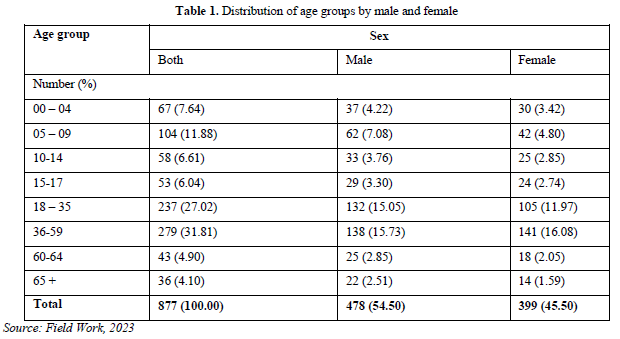
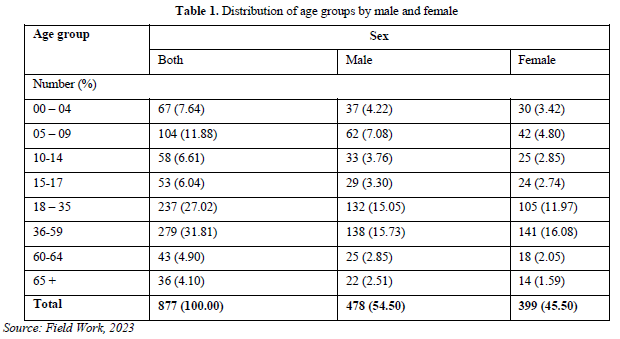
Table 1 highlights a demographic landscape conducive to SaemaulUndong (SMU) integration, characterised by a robust 69.77% working-age population that provides the human capital necessary for grassroots industrial scaling. The youth segment (27.02%) acts as a vital catalyst for digital and technological modernization, while the 36–59 age cohort (31.81%) serves as the primary bridge for preserving traditional heritage through modern application. Notably, the near-equal gender distribution within the midlife core suggests that women-led cooperatives are essential to the "Cooperation" pillar of community development. However, the presence of a significant younger generation (under 10) creates an urgent mandate for modernization to prevent urban migration and ensure the long-term survival of the Bijoypur pottery legacy.
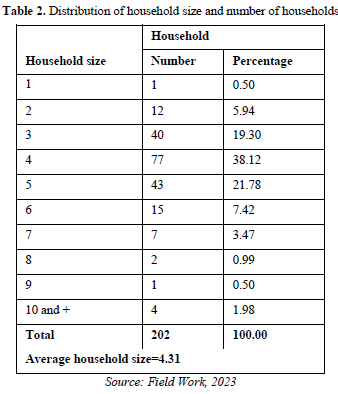
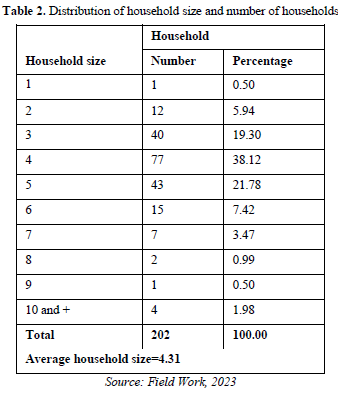
Table 2 Driven by the SaemaulUndong spirit of collective progress, the nuclear family serves as a vital 4.31-member "cooperative unit" that strengthens the village's economic foundation. With 59.90% of households maintaining these robust family sizes, the community leverages traditional artisan bonds to foster self-reliance and shared local prosperity.
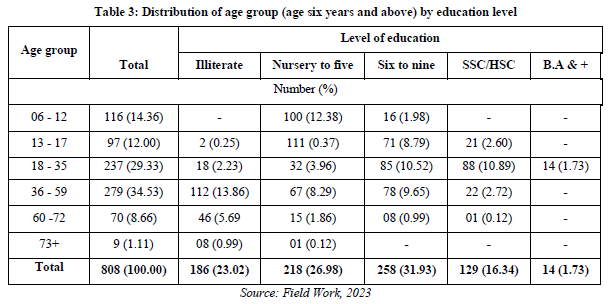
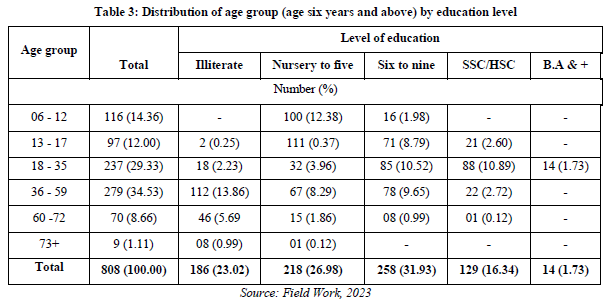
Table 3 Education levels reveal a generational shift. While 23.02% of the community remains illiterate (largely concentrated among individuals aged 36+), the 18–35 cohort shows a higher proportion with secondary or tertiary education. This educational upward mobility is a prerequisite for the "Saemaul" spirit, thereby facilitating the adoption of new technologies and cooperative management.
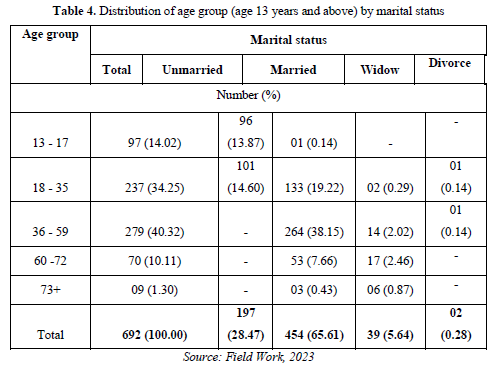
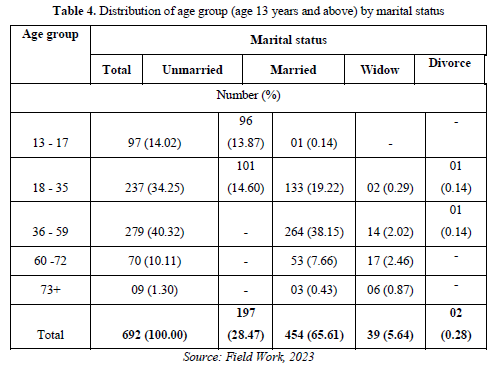
Table 4 The marital profile of Bijoypur artisans suggests a highly stable, family-oriented social structure, a prerequisite for the SaemaulUndong model’s emphasis on "community spirit." With 65.61% of the population married and concentrated in the productive age brackets (18–59), there is a strong foundation for household-based production units. The presence of widows (5.64%), particularly among older age groups, identifies a vulnerable demographic that SMU-inspired social cooperatives could target for specialized, less physically demanding craft roles, thereby ensuring inclusive livelihood dynamics.
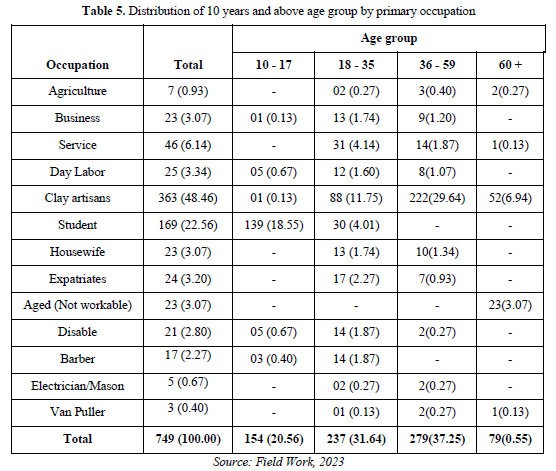
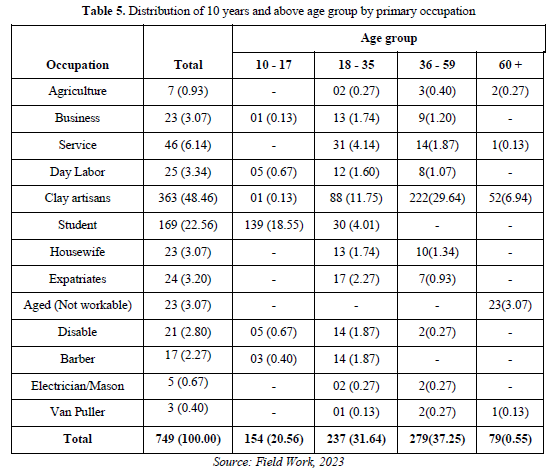
Table 5 The occupational data reveal a critical generational crossroads for Bijoypur’s craftsmanship. While pottery remains the primary livelihood (48.46%), it is heavily dominated by the 36–59 age group (222 individuals). In contrast, the 18–35 age group shows a significant preference for "Service" and "Expatriate" work, and the 10–17 age group is almost entirely composed of students (18.55% of the total population). This suggests that while the "potential" for revitalizing rural craftsmanship exists, there is a risk of a skills gap if youth do not perceive pottery as a viable modern profession. For a SaemaulUndong intervention to be successful, it must transform clay artisanship from a traditional "survival" activity into a high-value, modernized industry to attract the 22.56% of the population currently in education.
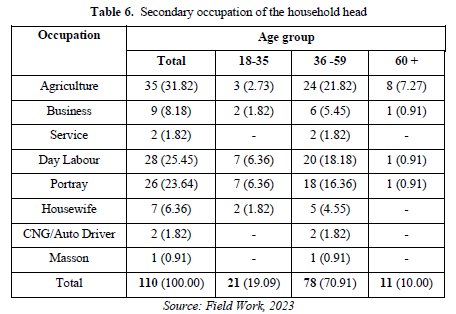
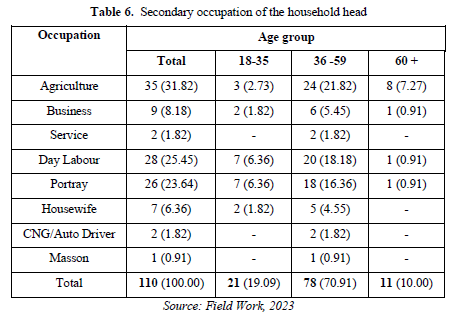
A critical reading of Table 6 suggests that the middle-aged cohort (36-59) is the primary driver of secondary income, representing 70.91% of the sample. However, the high reliance on Agriculture (31.82%) and Day Labor (25.45%) indicates that pottery alone does not provide sufficient financial security. From a SaemaulUndong perspective, the fact that only 19.09% of the younger generation (18-35) is engaged in these secondary livelihoods suggests a potential "succession crisis." If young artisans do not see pottery as a viable primary or secondary anchor, the revitalization of rural craftsmanship faces a demographic bottleneck.
Means of Livelihoods
In the context of Bijoypur’s clay artisans, livelihood refers to the integrated set of activities, assets, and capabilities essential for daily sustenance and long-term economic resilience. Operating a cottage-based pottery industry requires a multi-generational workforce, often drawing participation from various age groups and social classes. Because the pottery sector in Bijoypur is primarily organized at the household level, family members often adopt a dual-income strategy, balancing traditional craftsmanship with emerging opportunities in other sectors.
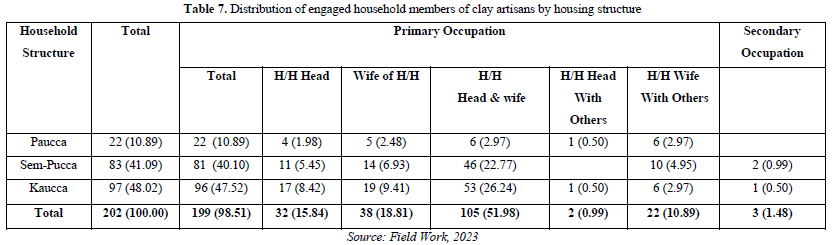
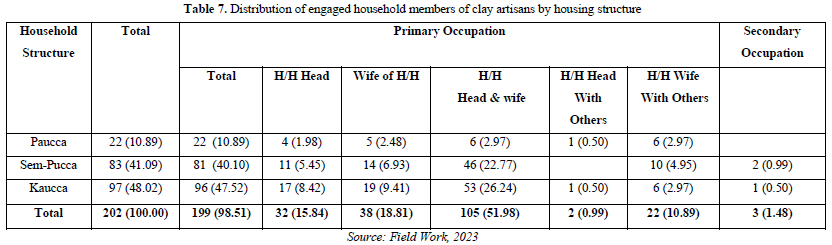
Table 7 reveals a significant reliance on pottery as the sole primary livelihood (98.51%), regardless of housing quality. However, a critical reading indicates that 51.98% of households rely on the joint labor of the Head and the Wife. This "dyad labor" model is most prevalent in Semi-Pucca and Kutcha houses. While the "Wife of Head" plays a visible role in 18.81% of cases, the data suggest that as housing quality improves (from Kutcha to Pucca), reliance on multiple family members shifts slightly. However, the craft remains the central economic pillar. Under a SaemaulUndong framework, this high level of primary engagement suggests a "ready-to-mobilize" workforce, though the 48.02% living in Kutcha (temporary) housing indicates a gap between craft dedication and economic security.
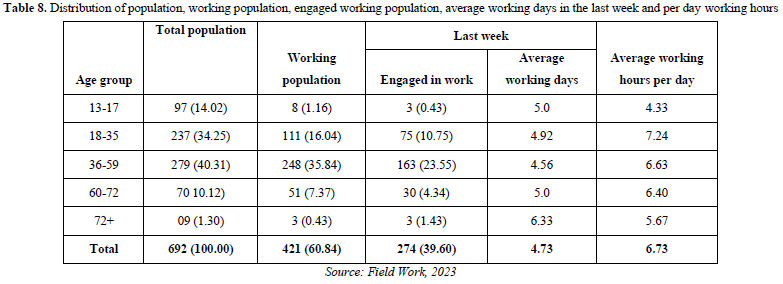
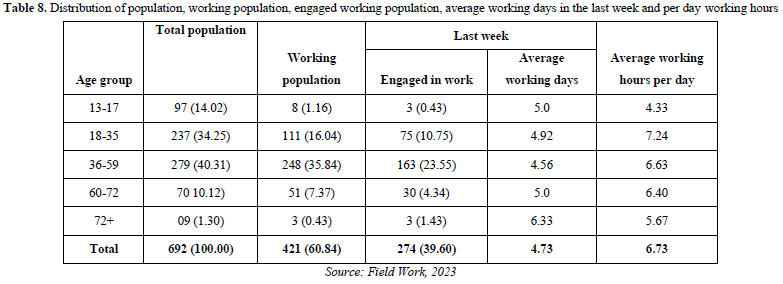
Table 8 The data reveal a significant "youth gap," with only 16.04% of the 18–35 demographic active in the trade, signaling a critical need for modernization to prevent the industry’s decline. While the 36–59 age group remains the industry’s backbone, the 72+ cohort’s high work frequency (6.33 days/week) highlights a traditional persistence that currently lacks a formal succession plan. Furthermore, the prevalence of Kutcha housing suggests that pottery remains a subsistence activity rather than a wealth-generating one, necessitating a shift toward "Saemaul-style" cooperative incentives. To ensure sustainability, the revitalization of Bijoypur must focus on formalizing women's essential labor and incentivizing youth entrepreneurship to bridge the gap between elders' mastery and future markets.
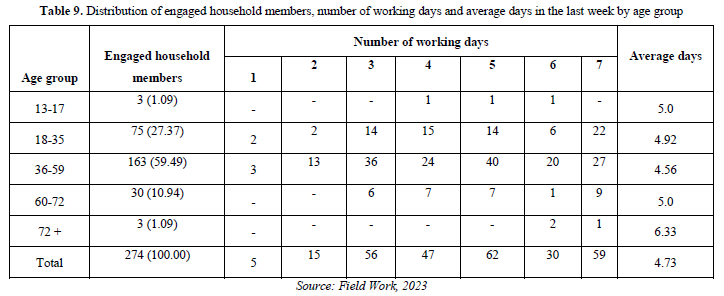
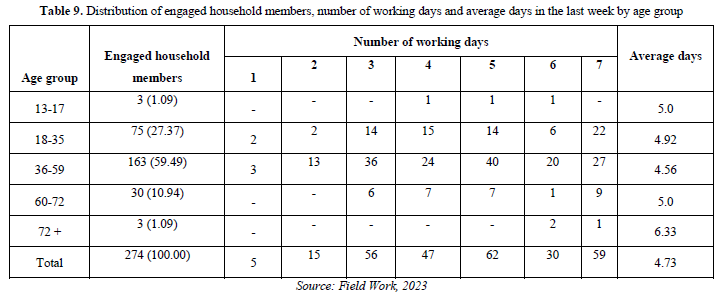
Table 9 The workforce data highlight a "backbone" generation of experienced artisans (36–59) who ensure the stability of craftsmanship but reveal a looming skill gap due to minimal youth participation (1.09%). While the 72+ age group embodies the SaemaulUndong spirit of Diligence with the highest weekly work intensity, this likely signals a "livelihood trap" necessitated by a lack of social safety nets. The moderate engagement of the 18–35 demographic suggests that while youth remain involved, they may be diversifying their income rather than committing fully to pottery as a primary enterprise. Ultimately, transforming this semi-intensive "subsistence craftsmanship" into a value-added industry requires the Cooperation pillar—specifically, communal mechanization to alleviate the physical burden on elderly laborers.
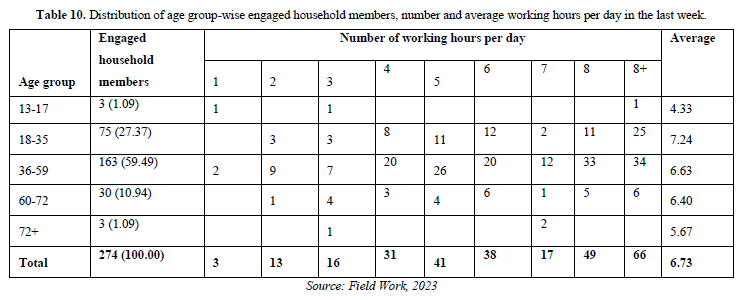
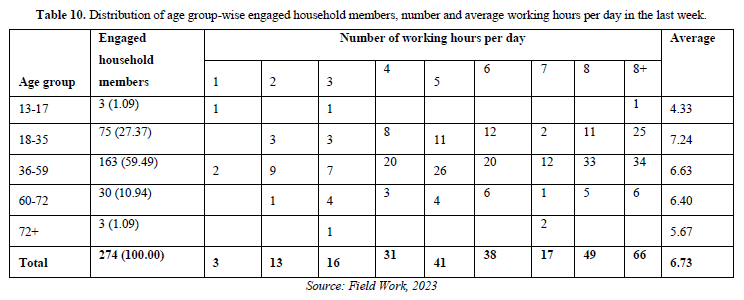
Applying the SaemaulUndong principles of diligence and cooperation, Table 10 identifies the 36–59 age group as the industry's "Core Artisans." However, their dominance underscores a pressing need for a structured mentorship pipeline. While the 18–35 demographic exhibits the highest work intensity, the stark 1.09% participation rate among those aged 13–17 signals a "generational cliff" that threatens the long-term sustainability of the craft. To ensure a successful revitalization, Bijoypur must modernize its techniques to transition from strenuous "clay labor" toward "creative entrepreneurship," incentivizing youth entry while preserving the resilient work ethic of its elder masters.
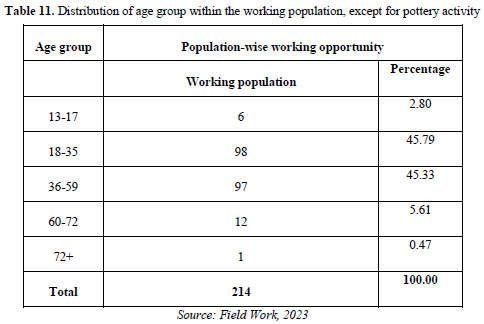
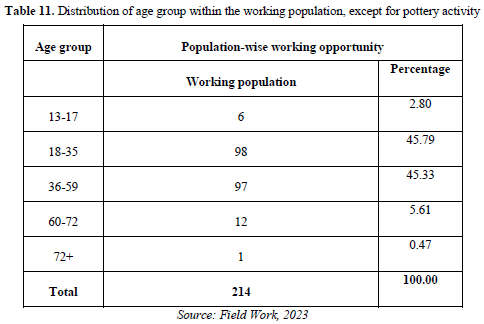
Table 11 reveals significant labor drift, with 91.12% of the non-pottery workforce aged 18–59, indicating a potential crisis in craft succession, as the most productive demographic opts for "modern" employment over traditional heritage. From a SaemaulUndong perspective, this shift suggests that while economic diversification is occurring, the lack of competitive incentives within the pottery sector risks leaving clay artisanship to an ageing population. Consequently, successful revitalization requires transforming the craft into a technologically modern, viable industry capable of recapturing interest among the 18–35 demographic to prevent the extinction of specialized techniques.
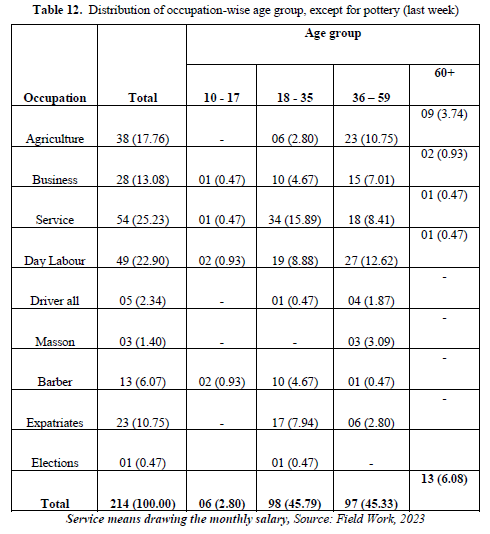
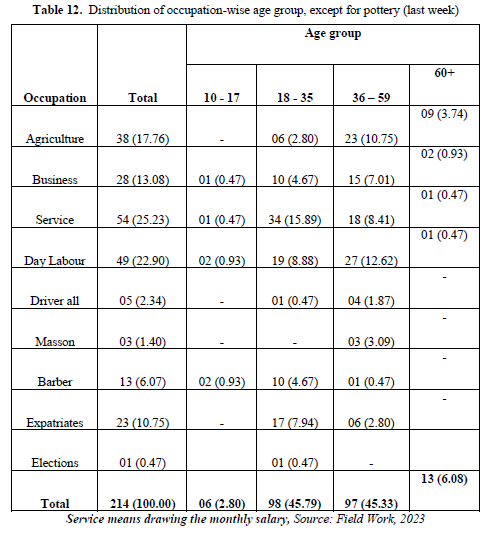
Table 12 highlights a demographic disconnect in which the 18–35 age group, despite being the largest cohort, prioritizes service and migration over traditional pottery, thereby threatening the continuity of ancestral skills. To counter this "youth drain" and the prevalence of low-skilled day labor, the SaemaulUndong framework should be applied to transition the workforce into high-value craft entrepreneurship and technical ceramic processing. Ultimately, revitalizing Bijoypur requires professionalizing craftsmanship into a modern, financially competitive sector that bridges the gap between older agricultural anchors and the younger generation’s pursuit of economic stability.
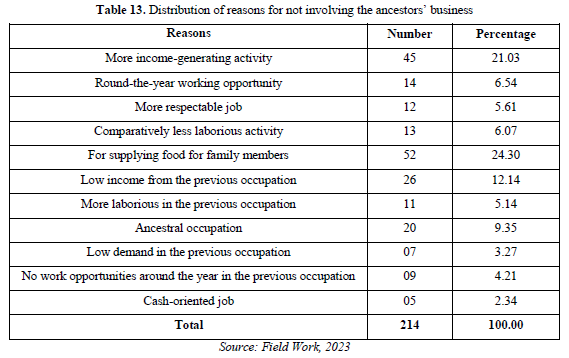
Table 13 illustrates a survival-driven exodus from traditional pottery, in which 45.33% of artisans priorities immediate food security and higher income over ancestral craftsmanship. These findings highlight a critical failure in current market linkages and labor efficiency, creating a "push factor" that stifles the SaemaulUndong spirit of self-help due to persistent economic insecurity. To revitalize this sector, interventions must utilize the SMU framework to modernize production and stabilize the value chain, transforming pottery from a laborious "ancestral trap" into a respectable, competitive, and year-round enterprise.
Land Size-wise Major Source of Income
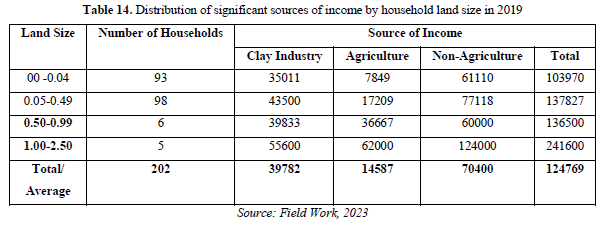
Table 14 illustrates that while the clay industry serves as an essential economic safety net for the landless majority, the significant income gap between landless artisans ($35,011 BDT) and medium-landowner entrepreneurs ($55,600 BDT) indicates that craftsmanship transitions from a survival tactic to a lucrative enterprise only with capital and structural support. This disparity underscores that a SaemaulUndong-inspired revitalization must move beyond mere skill preservation to address the "Land-Craft Paradox," ensuring that the landless are not just industrious laborers but empowered stakeholders in a modernized value chain. Ultimately, the data suggest that for rural revitalization to be sustainable, it must bridge this wealth gap by providing the structural resources necessary to transform "survival pottery" into high-value, market-competitive entrepreneurship.
Potentialities of Clay Artisans: A Saemaul-Inspired Framework
Based on Focus Group Discussions (FGDs) with artisans and industry owners in Bijoypur, several strategic interventions are recommended. These strategies aim to revitalize the craft by integrating traditional heritage with modern technology and the cooperative spirit of the SaemaulUndong model.
Establishment of an "Art Village" (Cultural Hub): A dedicated Art Village will provide a platform for folk artisans to showcase their products, exchange innovative ideas, and facilitate direct trade. This hub would bridge the gap between rural practitioners and institutional artists. By inviting domestic and international entrepreneurs, the village serves as a tool for market expansion, enabling artisans to refine product quality in response to global consumer feedback. As seen in Korea, community-led action under the SaemaulUndong increased productivity and a sense of ownership, lifting many villages out of poverty (Kim, 2013).
Technological Modernization and Training: To transition from subsistence to a competitive industry, machine-based training is essential. Introducing automated processing equipment and ensuring an uninterrupted gas supply will significantly enhance the durability and finish of earthenware. These efficiencies reduce production costs, making sustainable clay products competitive with plastic or aluminum alternatives. This approach reflects the SaemaulUndong's philosophy of local resource utilization and long-term planning (OECD, 2012).
A Centralized Design Bank: A digital and physical repository of designs, spanning prehistoric motifs to contemporary aesthetics, should be established. This "Design Bank" will preserve the cultural heritage of Bijoypur pottery while providing a reference point for local and international stakeholders to understand the craft's historical significance. Partnerships with fine arts faculties and design institutions can facilitate knowledge transfer and promote innovation, aligning with the SaemaulUndong principle of diligence (Yun, 2014).
Revitalization of Village Fairs and Social Recognition: Annual national and seasonal village fairs are vital for social cohesion and brand visibility. In line with the Saemaul spirit of Diligence, establishing national awards for excellence in earthenware will provide the social recognition necessary to encourage younger generations to remain in the profession.
Cooperative Formation (The Saemaul Model): Consistent with the "Self-Help and Cooperation" pillars, a Clay Artisan Cooperative should be formalized with support from BSCIC and the Bangladesh Folk Arts and Crafts Foundation. This body would manage collective bargaining for raw materials, operate export channels, and utilize research-based knowledge to solve systemic production crises.
Strategic Market Access and Showroom Expansion: To eliminate exploitative intermediaries, a network of showrooms should be established at the upazila, district, and divisional levels. Furthermore, a policy mandating the use of traditional earthenware in public offices would provide a guaranteed "base market" for these artisans.
Sustainable Raw Material Supply Chain: The government must formulate land-use policies to prevent the diversion of clay-rich soils to brick kilns. Utilizing excavated soil from canal and river dredging can ensure a steady supply of raw materials without compromising agricultural productivity, thereby aligning with the SMU principle of local resource utilization.
Transition to Workshop-Based Industries: Expanding from home-based production to mechanized workshops allows artisans to focus on their craft without the burden of individual capital investment. Government incentives for "Automatic Machine-Based Clay Industries" will facilitate this transition and scale up production for the global export market. These policies should focus on developing skills in business and hospitality to ensure the long-term viability and preservation of the traditional craft. These efforts will nurture entrepreneurial self-help, a cornerstone of the Saemaul spirit (Kang, 2015).
CONCLUSION
The clay artisans of Bijoypur and the Dalit drum-makers of Bangladesh represent a vital intersection of cultural heritage and untapped economic potential. However, this study reveals that these traditional industries are at a critical crossroads. Artisans face significant headwinds, including soaring raw material costs—specifically gas and quality clay—limited access to formal credit, and the pervasive threat of synthetic alternatives. Without a decisive transition from a "survival" mindset to a "growth" orientation, these eco-friendly crafts risk extinction. To revitalize these sectors, the principles of SaemaulUndong (SMU) offer a transformative blueprint. By fostering the spirit of Diligence, Self-Help, and Cooperation, fragmented household struggles can be converted into a powerful cooperative movement. This revitalization depends on a synchronized, multi-stakeholder approach in which government bodies (BARD, RDA, BAPARD, BRDB, and BSCIC) and NGOs implement pilot projects that mirror the SMU "top-down support, bottom-up participation" strategy. Ultimately, supporting these artisans is more than an act of cultural preservation; it is a strategic necessity for rural employment and national economic diversification. Through technological modernization, uninterrupted utility supply, and the elimination of exploitative intermediaries, these traditional crafts can be transformed into flourishing, market-oriented industries. By embracing the "lost spirit" of community-driven progress, Bangladesh can ensure these heritage sectors not only survive but thrive in the 21st-century global economy.


Bangladesh Bureau of Statistics. (2003). Statistical Yearbook of Bangladesh-2001. Statistical Division, Ministry of Planning, Government of the People’s Republic of Bangladesh.
Bangladesh Bureau of Statistics. (2011). Statistical Yearbook of Bangladesh-2010. Statistical Division, Ministry of Planning, Government of the People’s Republic of Bangladesh.
Bangladesh Bureau of Statistics. (2012). Bangladesh Economic Review 2011- 2012. Statistical Division, Ministry of Planning, Government of the People’s Republic of Bangladesh.
Bangladesh Bureau of Statistics. (2013). Household income and expenditure survey-2010. Statistical Division, Ministry of Planning, Government of the People’s Republic of Bangladesh.
Banglapedia. (2015). Pottery in Bangladesh. Asiatic Society of Bangladesh.
OECD Development Centre. (2012). SaemaulUndong movement in the Republic of Korea. OECD Publishing.
Practical Action. (2011). A new potter's wheel has been a revolution. http://practicalaction.org/appeal_potter
SOS-arsenic.net. (2009). Folk art, heritage, and traditional professions. http://www.sos-arsenic.net/english/pottery/index.html
The Daily Star. (2005, June 5). Village potters go global. http://archive.thedailystar.net/2005/06/03/d5060301011.htm
No Files Found


Internationally Accepted
Share Your Publication :